
Noé Canjura
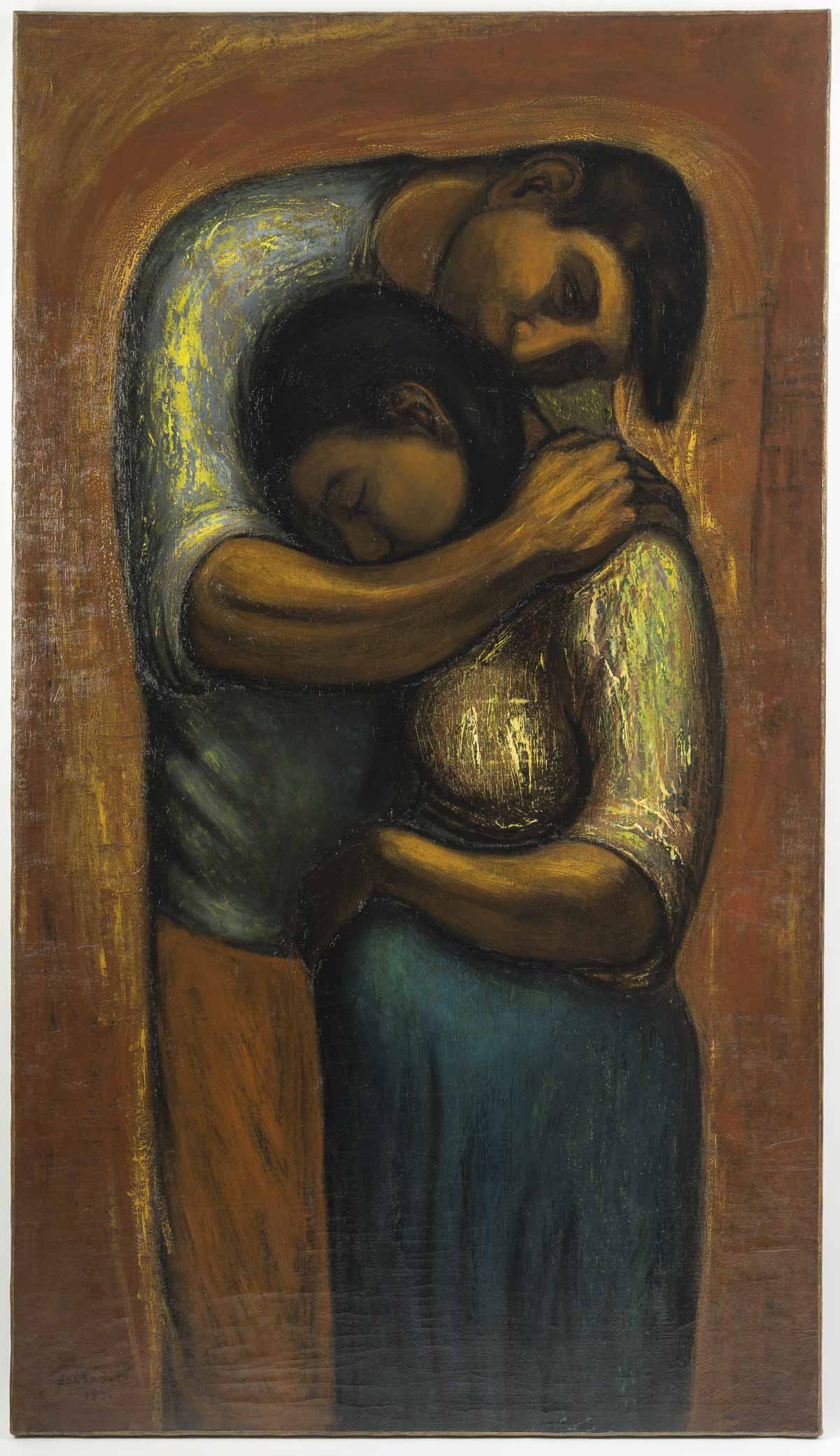
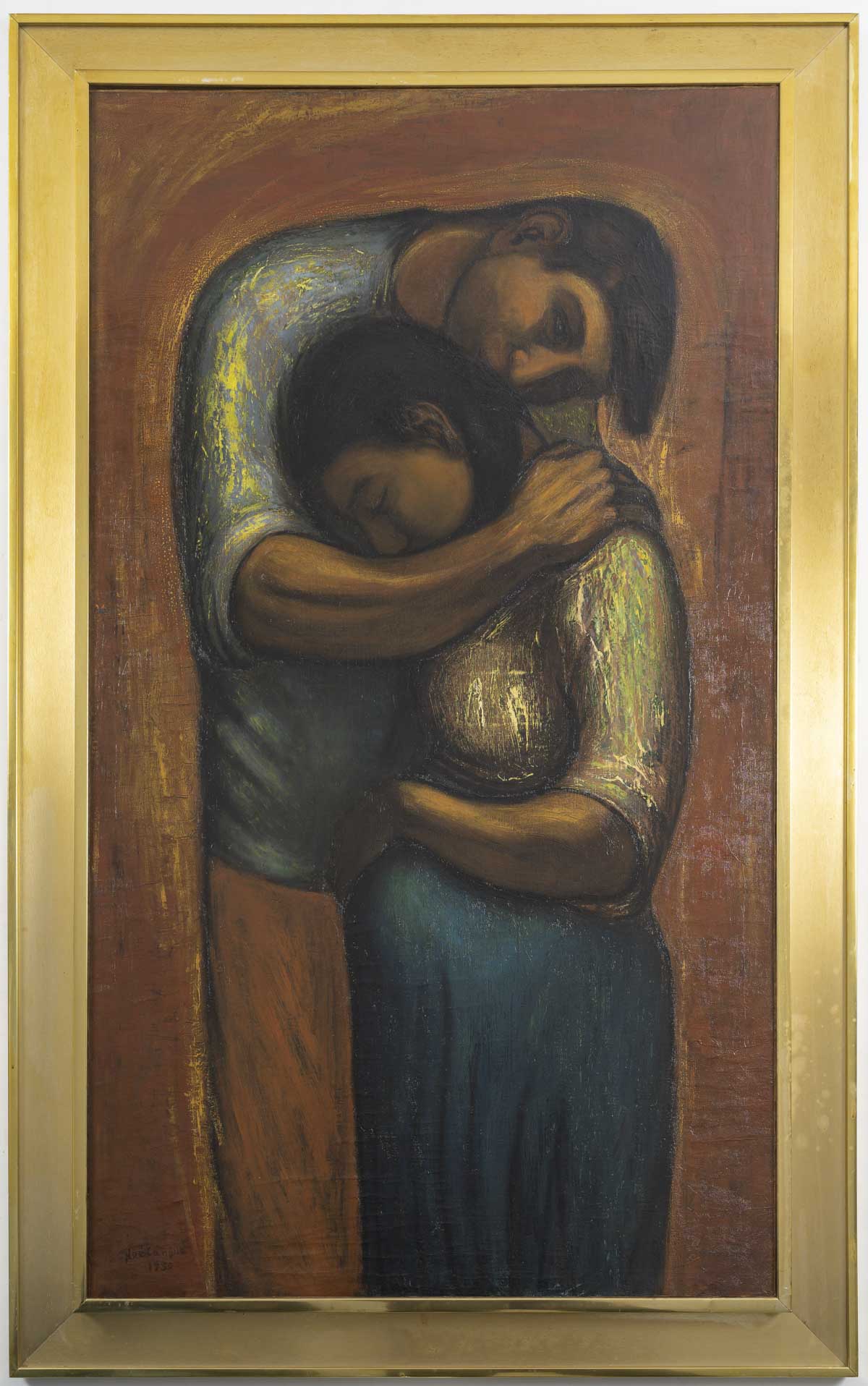
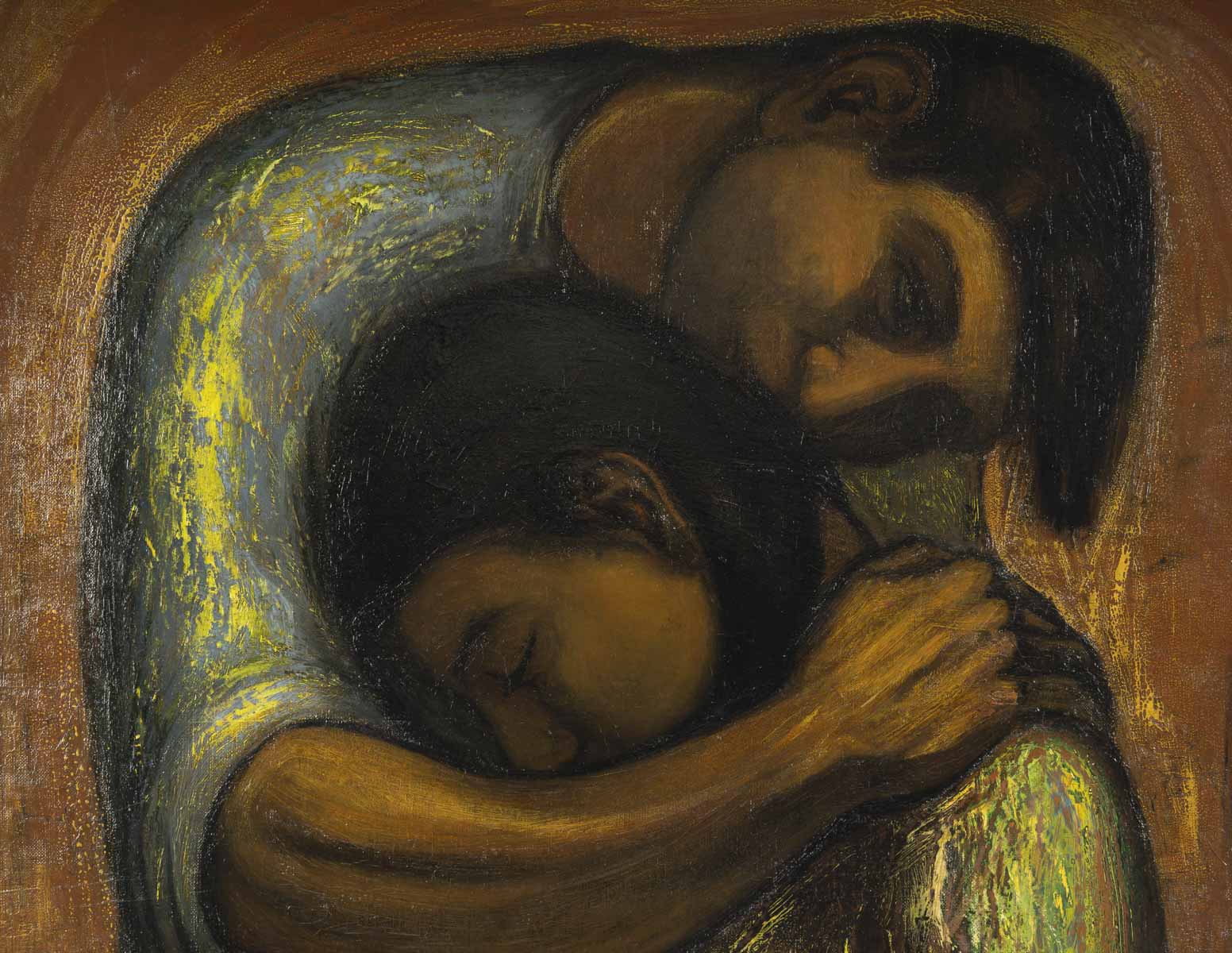
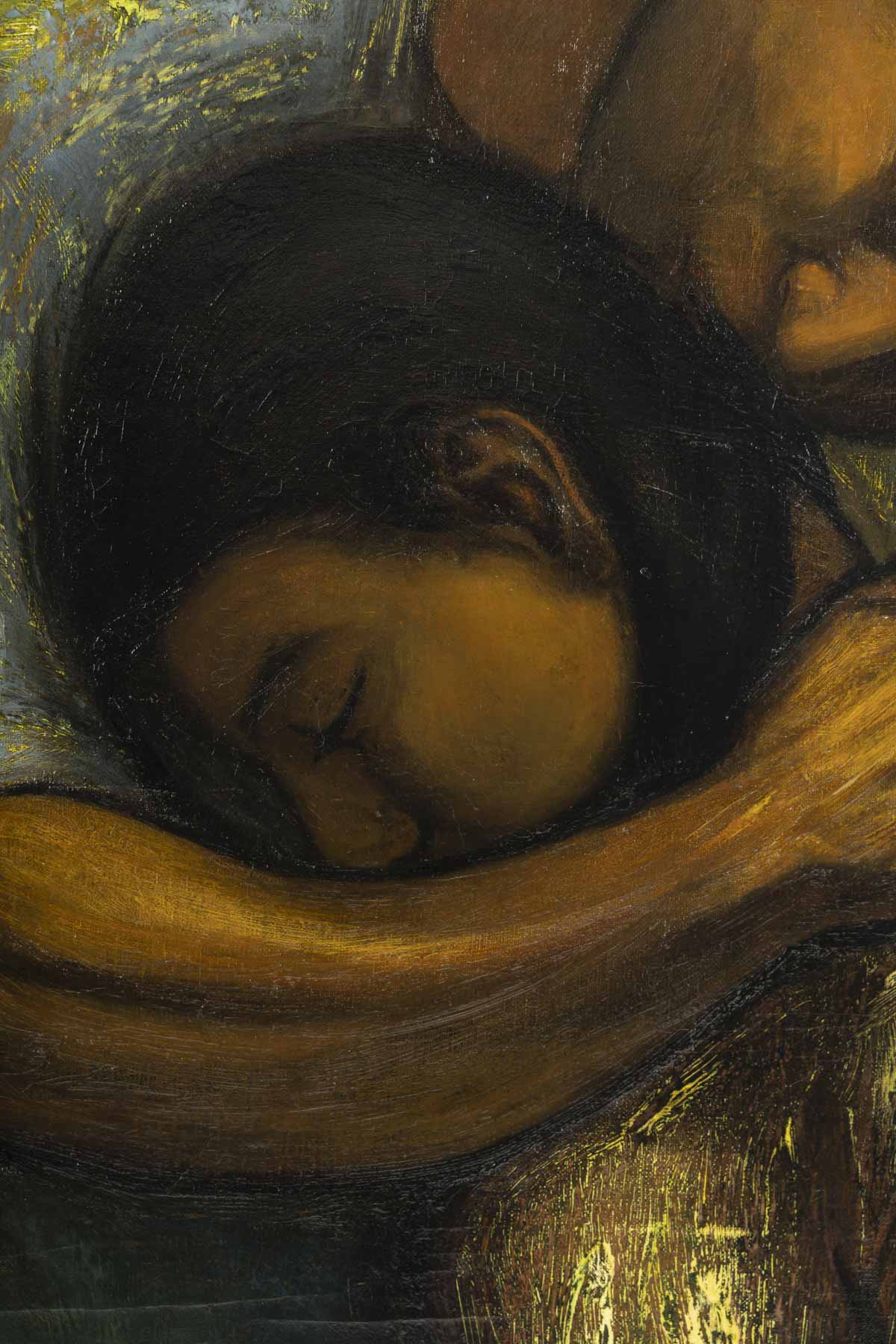
A powerful work by Salvadoran painter Noé Canjura depicting an embracing couple. An intimate subject of great emotional power.
Oil on canvas
Dimensions: 81 x 65 cm
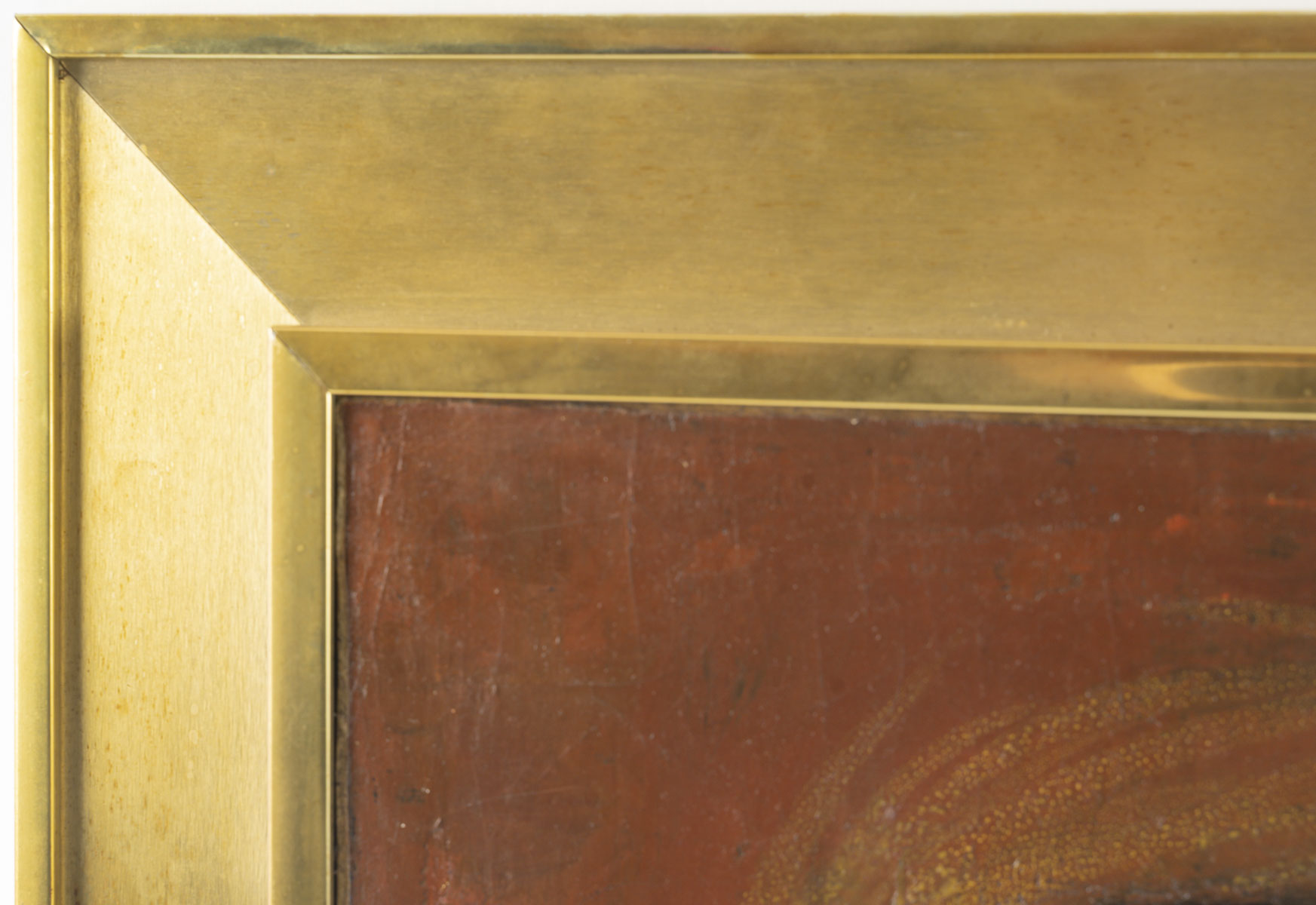
With frame: 105 x 88 cm
Price: 3900 euros
Noé Canjura, from El Salvador to Paris
Noé Canjura is an icon in Salvador of his generation’s greatest art school movement. He also symbolizes the human capacity to reinvent himself, turning a humble young barefoot student into a powerful creator of his own existence.
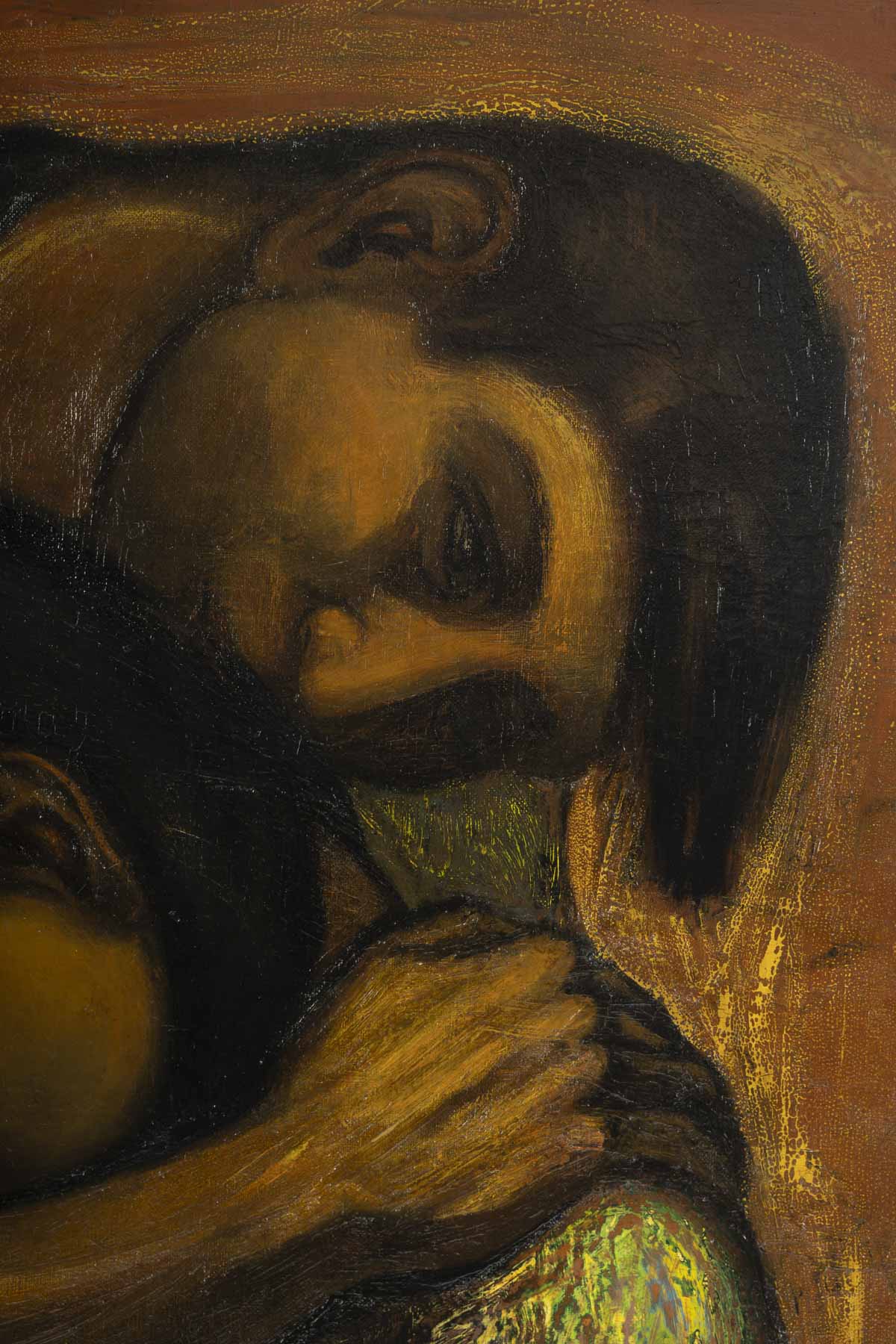
Canjura’s painting is a synthesis of several influences that profoundly mark his character and his art. He composes powerfully, with great detail yet great subtlety; his simple planes of color suggest the beginnings of abstraction.
The embrace, an intimate subject of great emotional power
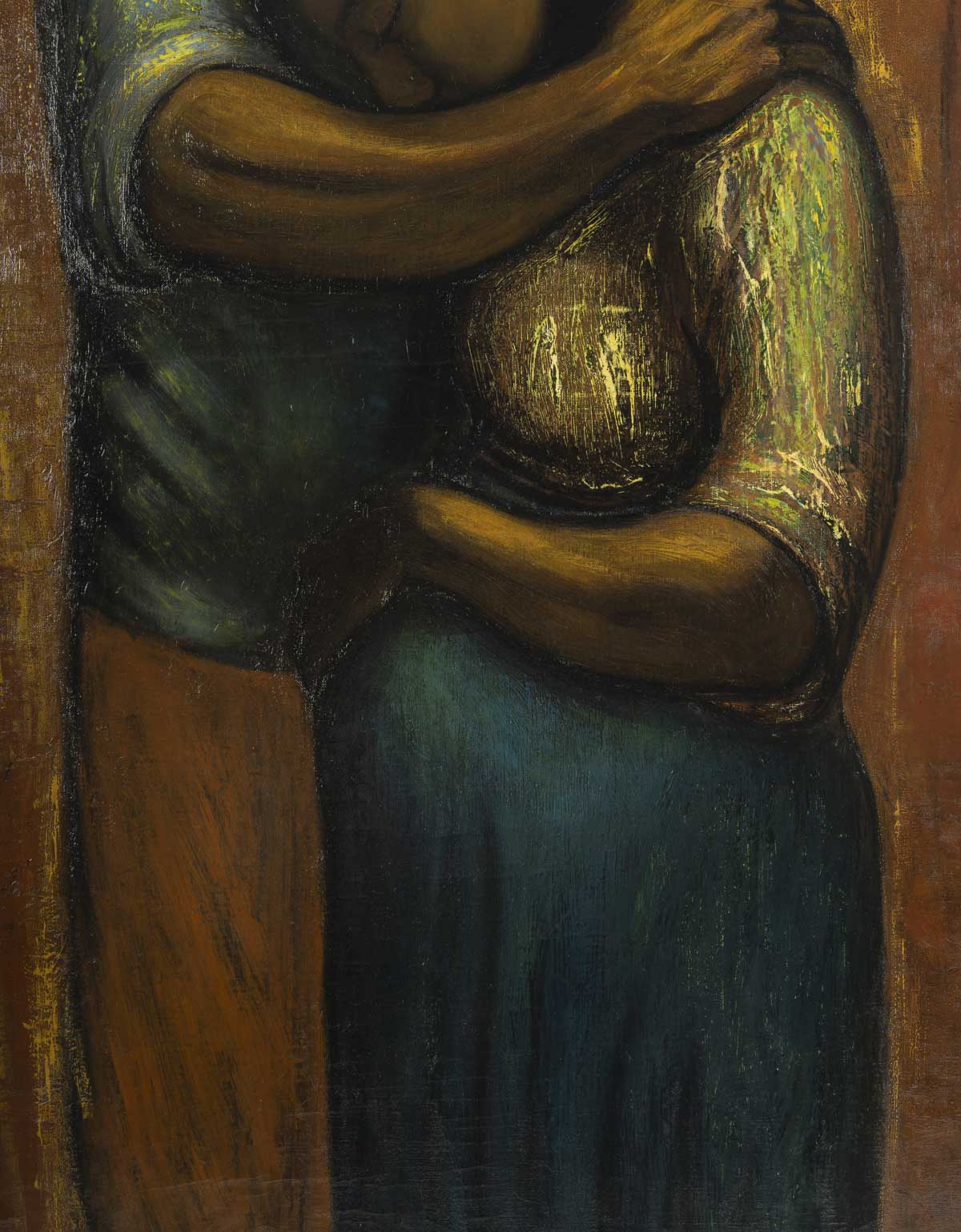
In our painting, the couple are embracing each other so gently and fully that they become one. Their position speaks of the fusion of love, the feeling of eternity for this couple expecting a child. A true hymn to love!
We can’t help but think of Constantin Brancusi’s sculpture Le Baiser (1907) and see in it a correspondence with Gustav Klimt’s famous painting Le Baiser (1908), which has inspired many artists.
A sculptural, stylized work in a decorative format
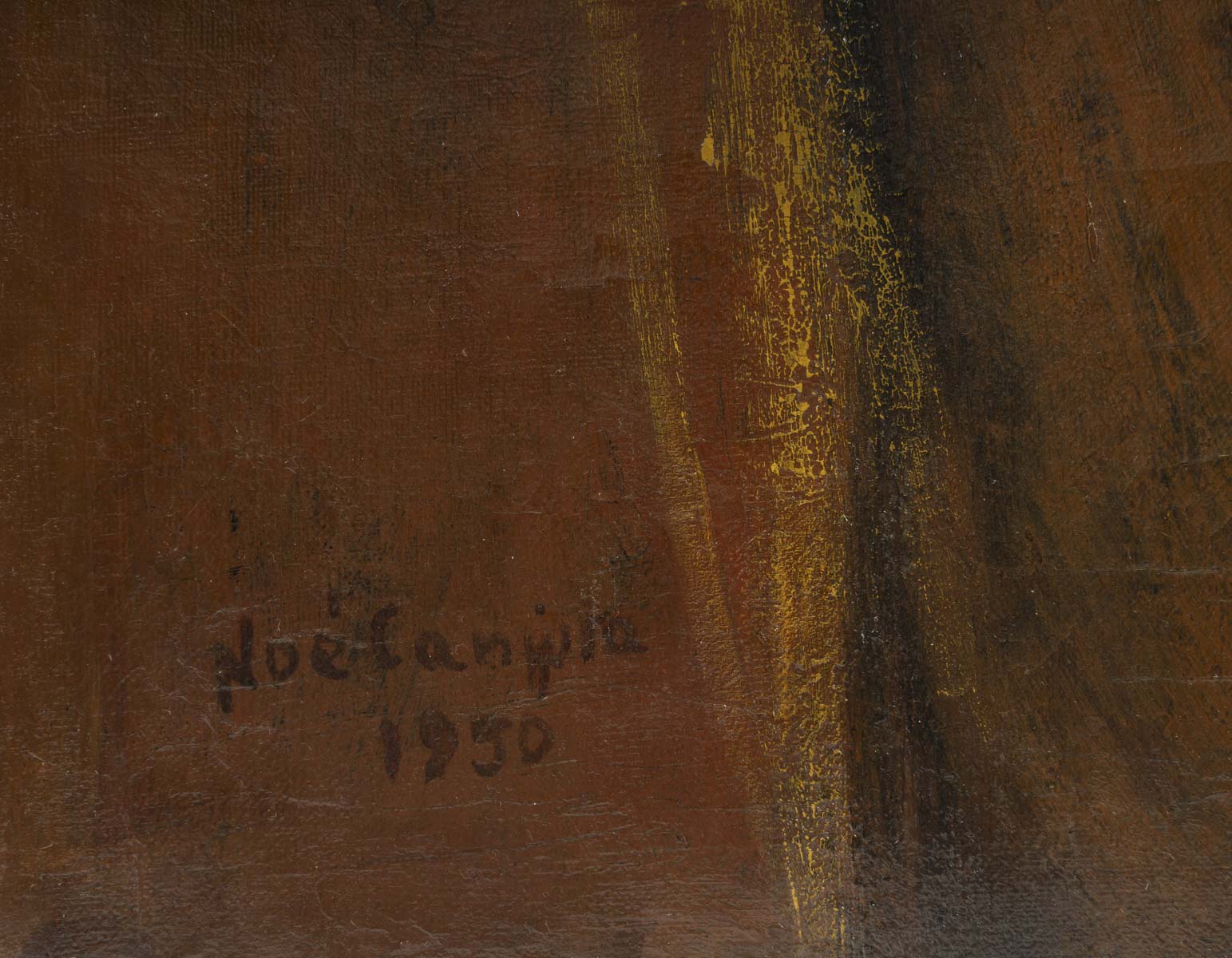
This work is dated 1950. Noé Canjura had just arrived in Paris, still steeped in the monumental paintings and murals of Diego Rivera and Latin American culture.
Biography
Noé Canjura was born in Apopa, a village in the Republic of El Salvador, Central America, into a family of humble peasants. They live in great poverty. To pay part of his expenses and continue attending school, Canjura helps his father while working in a sawmill.
His talent for drawing was discovered at At the age of 17, his adventure into the world of art begins. He first studied painting at the Academy of Spanish master Valero Lecha in the capital, San Salvador. In early 1942, Canjura participated in exhibitions with Lecha’s group throughout El Salvador. He later exhibited in Guatemala.
In 1948, he went to Mexico to continue his studies. There, he was strongly influenced by Diego Rivera, at the height of his fame. Rivera’s influence gradually waned, and Canjura turned to the art of Gauguin, from whom he had learned the use of curves.
That year, Canjura had his first exhibition in the United States.
Life in Paris, 1949-1970
Canjura’s career changed dramatically in 1949, when he came to Paris on a grant from his government. He studied at the École nationale supérieure des beaux-arts, where he learned the technique of fresco.
He was strongly attracted to and influenced by the work of Courbet and Le Nain. But despite this, he remained attached to the subjects, colors and customs of his native land.
In 1953, Canjura had his first solo exhibition in Paris, and France became his adopted home. He married Madeleine Bachelet, an artist like himself. They had a daughter, Leticia Canjura.
Returning briefly to El Salvador in 1957, he saw his country through different eyes. From then on, color and light became an important part of his work.
Between 1959 and 1965, the City of Paris purchased four of his paintings for its permanent collection.
Paris Salons
Canjura is a member of the “Société nationale des beaux-arts” and a fellow of the “Salon de la jeune peinture”. He regularly exhibits in the major Paris salons.
He also exhibits abroad, including the United States.
Noe Canjura dies in Morienval, France, at the age of 48.
Museums
– Museum of the City of Paris
– National Museum of El Salvador
– Hamishka Leomanut Museum in Ein Harod, Israel.

