


Maurice Chabas
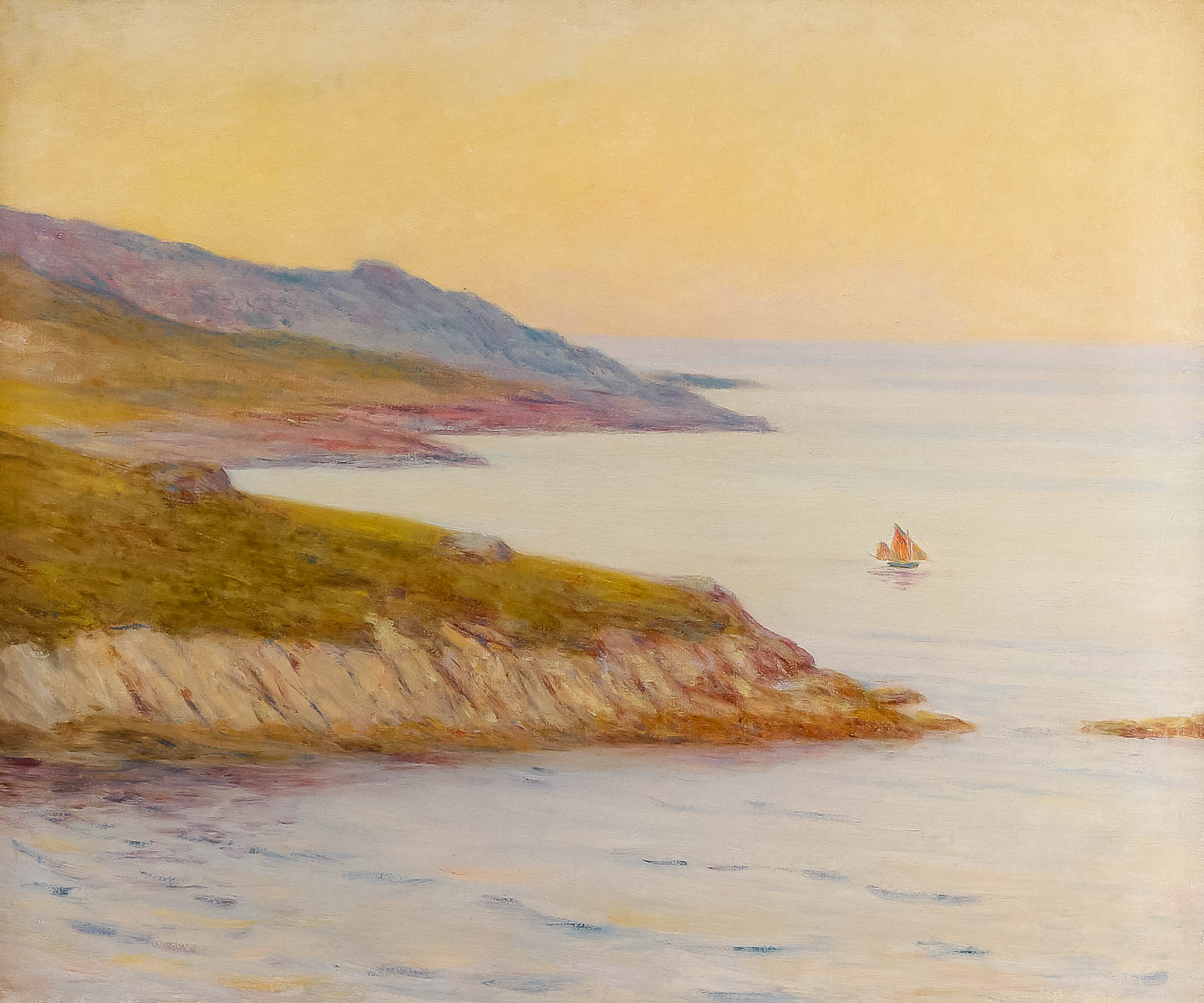
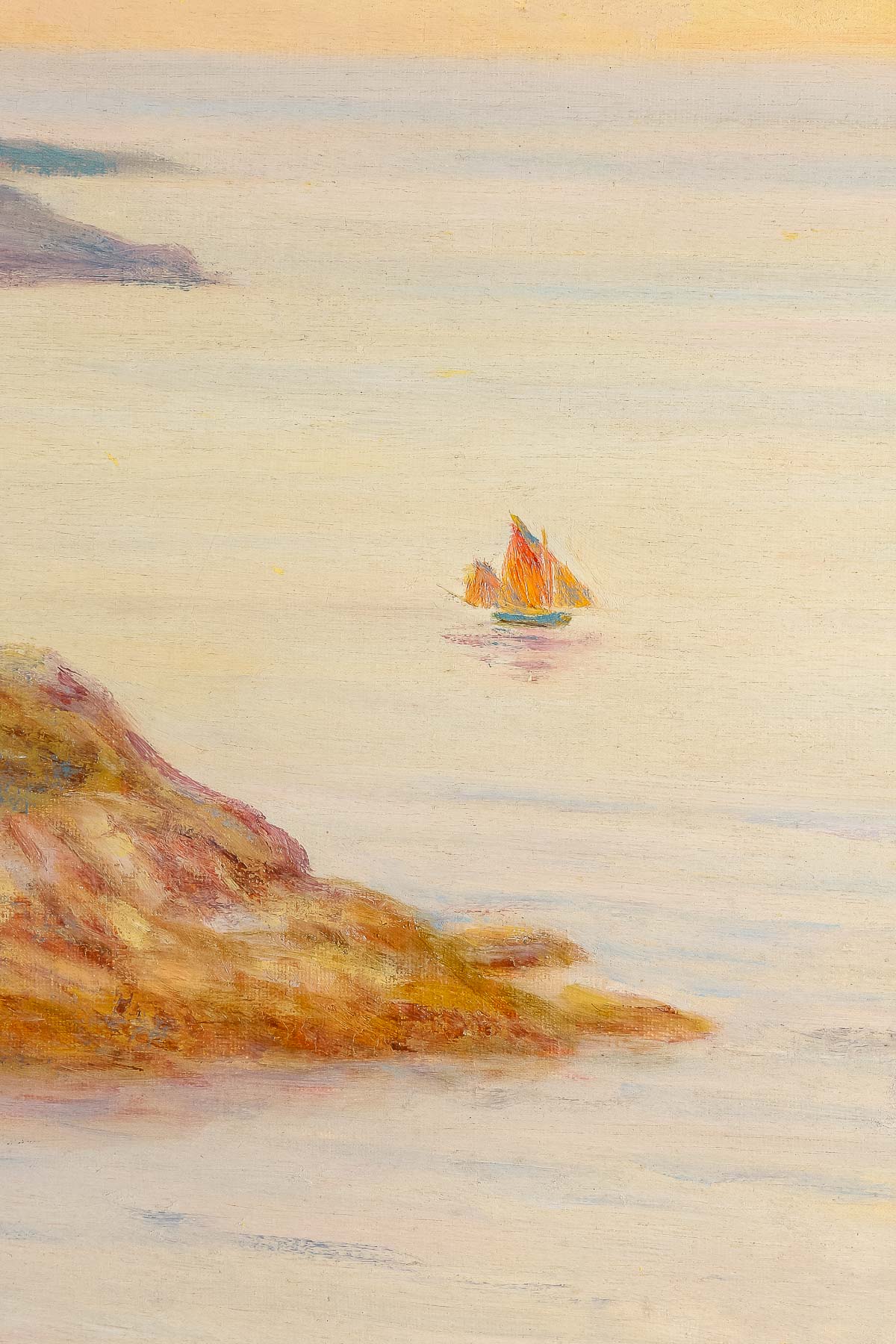
“The red sails” in Douarnenez Bay
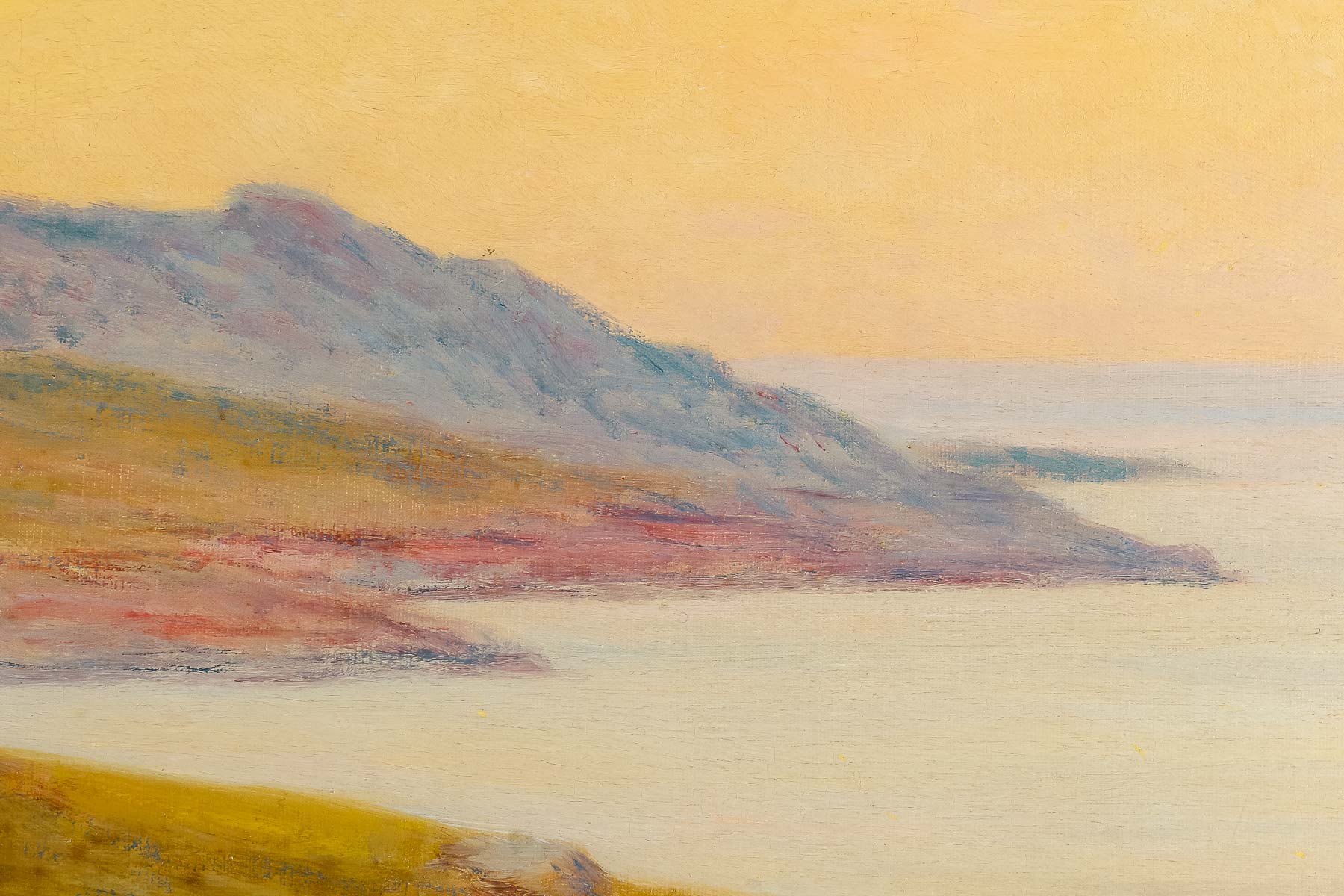
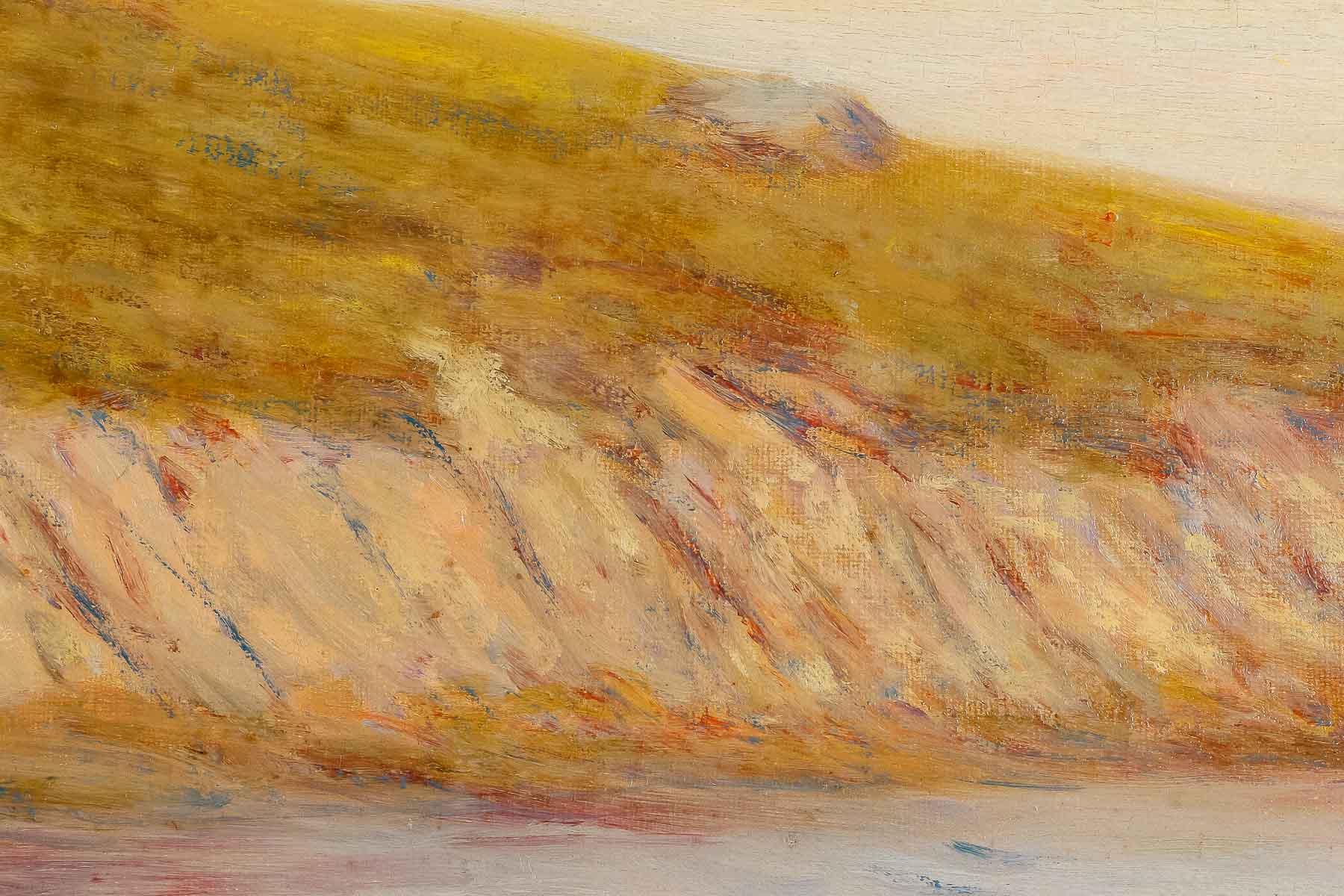
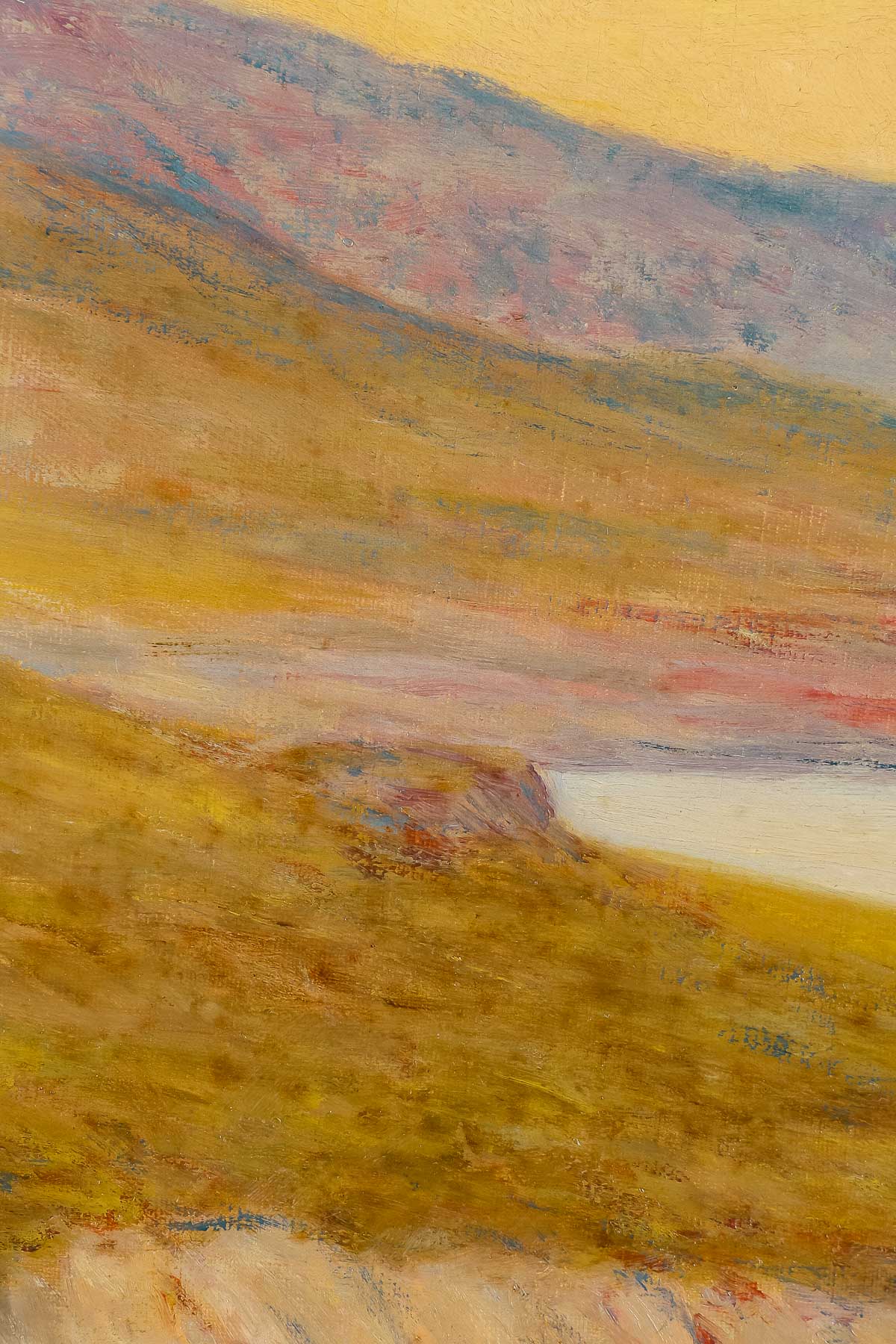
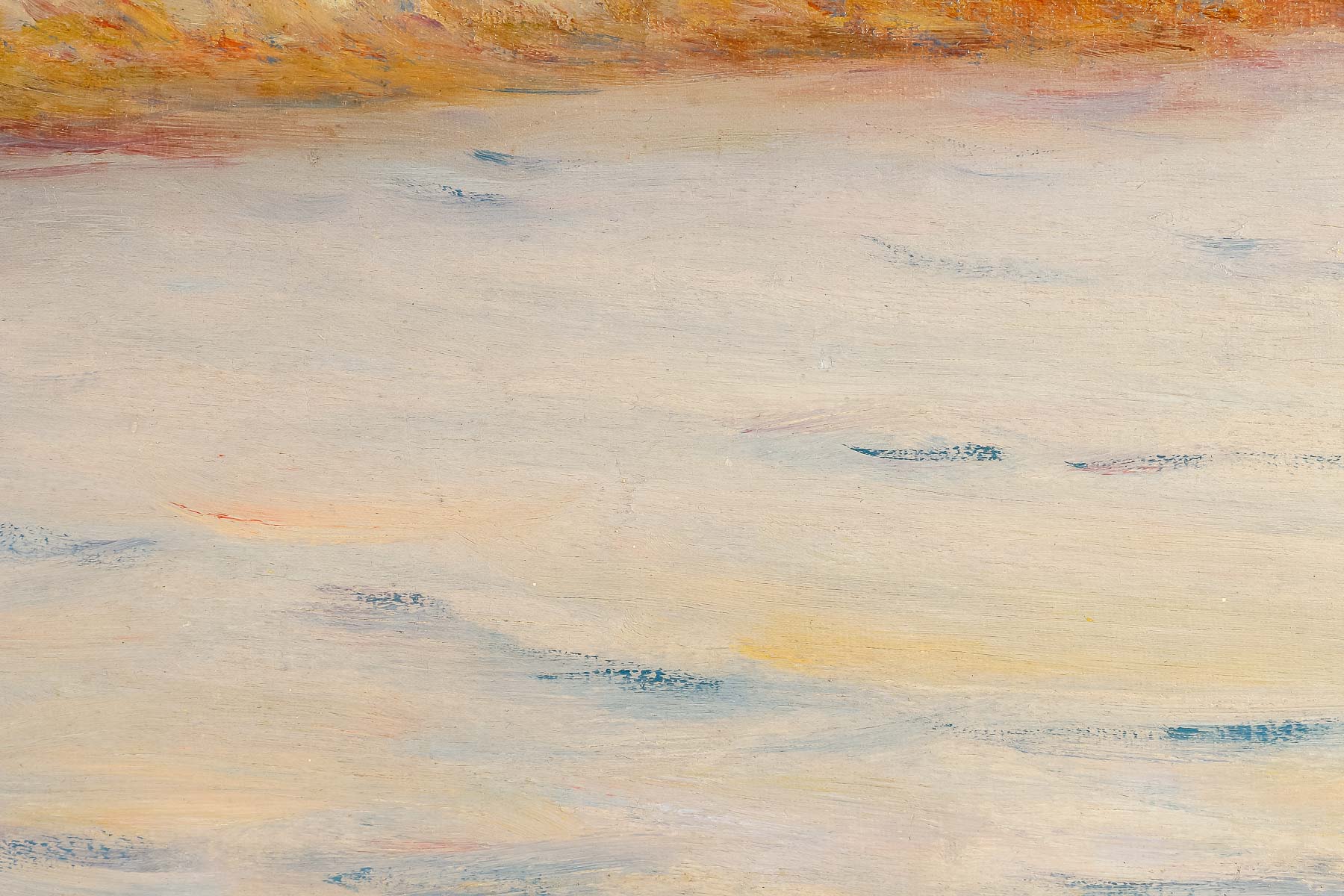
Maurice Chabas, a sensitive and mystical artist, gives us a seaside with Symbolist overtones. A gentle harmony and calm emanate from this seascape.
Oil on canvas
Dimensions: 54 x 65 cm
With frame: 67 x 77 cm
Sold
Maurice Chabas, his love of Brittany
Born in Nantes, Maurice Chabas has always cherished his love of the Breton countryside, an essential source of inspiration.
Brittany, a region that has greatly inspired him, takes on the enigmatic serenity characteristic of the artist.
A peaceful nature imbued with gentle harmony.
Maurice Chabas naturally gravitates towards landscapes, often lending them a special, contemplative and mystical atmosphere.
Serenity, contemplation and calm convey the painter’s state of mind at the moment of creation, reflecting the artist’s unshakeable, inward calm
In our particularly luminous painting, only the red sail of a boat animates the work, without this lively accent breaking the gentle harmony that emanates from the landscape.
“From all these landscapes emanate serenity, peace, like a supreme detachment. Things seem to have lost their materiality. Their beauty tends towards the desire for absolute beauty, that which is both harmonious and geometric. “Writing by journalist and art critic Léon de Saint-Valéry on Maurice Chabas’s landscapes.
Biography
The Chabas family of artists
Maurice Chabas was born in Nantes. Son of a wealthy merchant and painting enthusiast, he was the elder brother of the painter Paul-Émile Chabas.
his father, an amateur painter, encouraged the artistic vocation of his two sons Maurice and Paul, while their elder brother, Charles, took over the family business. After attending the École des Beaux-Arts in Nantes, the two young men, whose families had moved to Paris, benefited from lessons at the Académie Julian. Both students of William Bougereau and Tony Robert-Fleury, they gradually took very different paths. Closer to his masters, Paul-Émile developed a more worldly style, focusing on the female figure and the nude. Conversely, Maurice, after devoting himself to gallant Pre-Raphaelism in the 1890, he gradually turned to Symbolist landscapes. It was this second phase that ensured Maurice Chabas a number of state purchases.
Between 1907 and 1934, no less than thirteen works by Maurice Chabas, mainly landscapes painted in oils, were acquired by the Beaux-Arts administration.
Most of these canvases were inspired by Brittany.
Maurice Chabas, an atypical painter
At the same time, he produces work with a wide range of aesthetic qualities. Passing indifferently from academicism to Symbolism, Nabi or a certain abstraction, he refuses to adhere to a single aesthetic and seeks above all to elevate the spirit and reveal Beauty. His metaphysical reflections and spiritual quest brought him into contact with theologians, Hindu mystics, astronomers such as Camille Flammarion, spiritualists and occultists, including Joséphin Péladan, founder of the Salon de la Rose-Croix, where he exhibited from 1892 to 1897.
This plurality of styles is based on the same idealist and spiritualist conception, which animates all his work. Chabas was convinced of the artist’s social role as a spiritual guide.
He took part in the Salons and Universal Exhibitions in Paris in 1900 and Brussels in 1910.
Decorative paints
In 1895, he was commissioned to decorate the buffet at the Gare de Lyon-Perrache station, with four large marouflaged canvases depicting Allegories in praise of Lyonnais silk.
In 1898, he won the competition to decorate the wedding hall at Vincennes town hall, where he produced a set of seven marouflaged canvases in 1902. He produced a set of seven marouflaged canvases in 1902.
In 1900, he produced the Marseille canvas for the main room of the Le Train bleu restaurant at the Gare de Lyon in Paris.
End of life
He now paints almost exclusively religious subjects, in a vaporous luminosity that tends towards abstraction. He lived far from his family, and died on December 11, 1947 at home in Versailles.
Bibliography
– Léon Bazalgette, “Le Salon de la Rose-Croix”, Essais d’art libre, Girard, Paris, 1892.
– Henry Frantz, “Les peintures décoratives de la nouvelle gare de Lyon”, L’Art décoratif, 1901, pp. 94-106.
– Comte Léonce de Larmandie, L’entr acte idéal, Chacornac, Paris, 1903.
– Ulrich Thieme and Felix Becker, Allgemeines Lexikon der Bildenden Künstler von der Antike bis zur Gegenwart, E. A. Seemann, Leipzig, 1912.
– Gustave Kahn, “Maurice Chabas”, L’Art et les artistes, no. 9, April 1913.
– Collectif, Maurice Chabas organizes an exhibition, April 18, 1915 [incomplete ref.]
– Gustave Kahn, Maurice Chabas, published by Galerie Devambez, Paris, 1922.
– Maurice Chabas and Gustave Kahn, Maurice Chabas – Le calme et la poésie dans la nature, exhibition catalog, booklet in 12°, Bruxelles, galerie des Artistes français
– André Castelot, Maurice Chabas, éditions Galerie Bernheim-Jeune, 1952.
– Germaine Chanteaud, “Maurice Chabas”, Revue d’Histoire du XIVe
– Gérald Schurr, Les petits maîtres de la peinture, valeur de demain, vol.2, Les Éditions de l’Amateur, 1972.
– Philippe Jullian, Les Symbolistes, “Bibliothèque des arts” collection, Ides et Calendes, Neuchâtel, 1973.
– Robert Pincus-Witten, Occult symbolism in France – Joséphin Peladan and the “Salons de la Rose-Croix”, Garland Publishing, New York, 1976.
– Collectif, Les peintres de la génération d’Aristide Briand dans les collections du musée des beaux-arts de Nantes, May 1982, p. 25-26.
– Janine Mery, Pelada, l’ésotérisme et les peintres de la Rose-Croix, Maîtrise Paris IV-Sorbonne, 1990.
– Jean-Jacques Lévêque, Les années de la Belle Époque, Ed. Illustrated, 1991
– Jean Da Silva, Le Salon de la Rose-Croix, 1892-1897, Syros-Alternatives, Paris, 1991.
– The mosaic of the Cinquantenaire hemicycle, Brabant Tourisme, March 1992.
– Gérald Schurr, Le Guidargus de la peinture, Les Éditions de l’Amateur, 1996.
– Emmanuel Bénézit, Dictionnaire des peintres, sculpteurs, dessinateurs et graveurs, vol.3, Gründ, 1999.
– Snoeck-Ducaju, Les Peintres de l’âme, Ghent, 1999.
– Agnès Noblet, Jean-Philippe Bouilloud, Sylvie Camet, Un Univers d’artistes, Éd. l’Harmattan, 2003, 548 p. (ISBN 2-747554-17 1).
– Myriam de Palma, “Maurice Chabas (1862-1947) et les mondes de l’au-delà”, Bulletin de la Société de l’art français, 2004, pp. 379-398.
– Myriam Reiss-de-Palma, Maurice Chabas (1862-1947), artist’s catalog raisonné and art history thesis, Paris IV Sorbonne, November 19, 2004
– Françoise Daniel, Les peintres du rêve en Bretagne – Autour des symbolistes et des Nabis du musée, Musée des Beaux-Arts de Brest editions, 2006.
– Myriam de Palma, Maurice Chabas, peintre et messager spirituel (1862-1947), Somogy Éditions d’art, 2009.
– Sylvie Carlier, Le symbolisme en Rhône-Alpes – De Puvis de Chavannes à Fantin-Latour, 1880-1920, éditions du musée Paul-Dini, Villefranche-sur-Saône, 2010.

