
Jules Emile Zingg
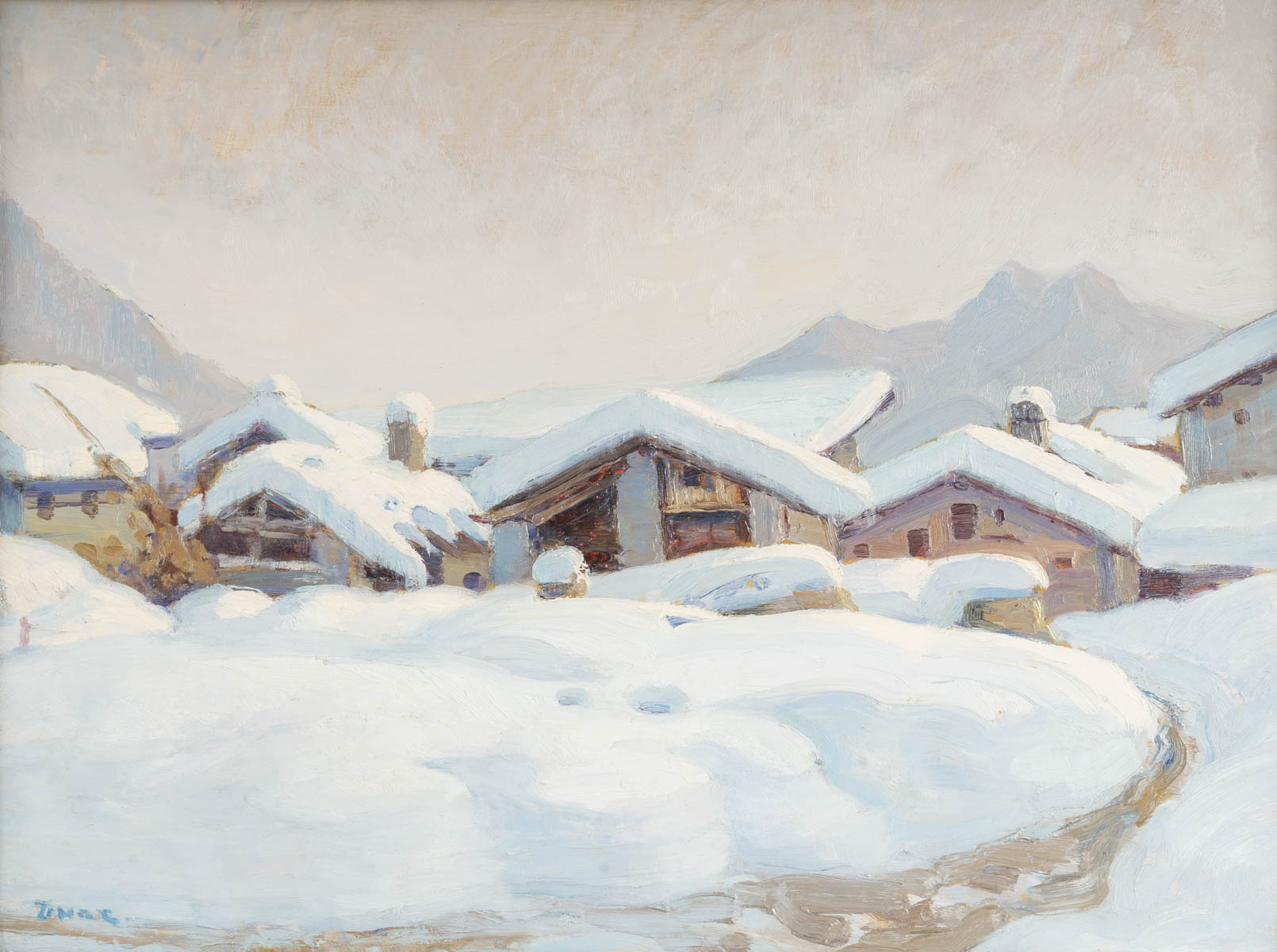
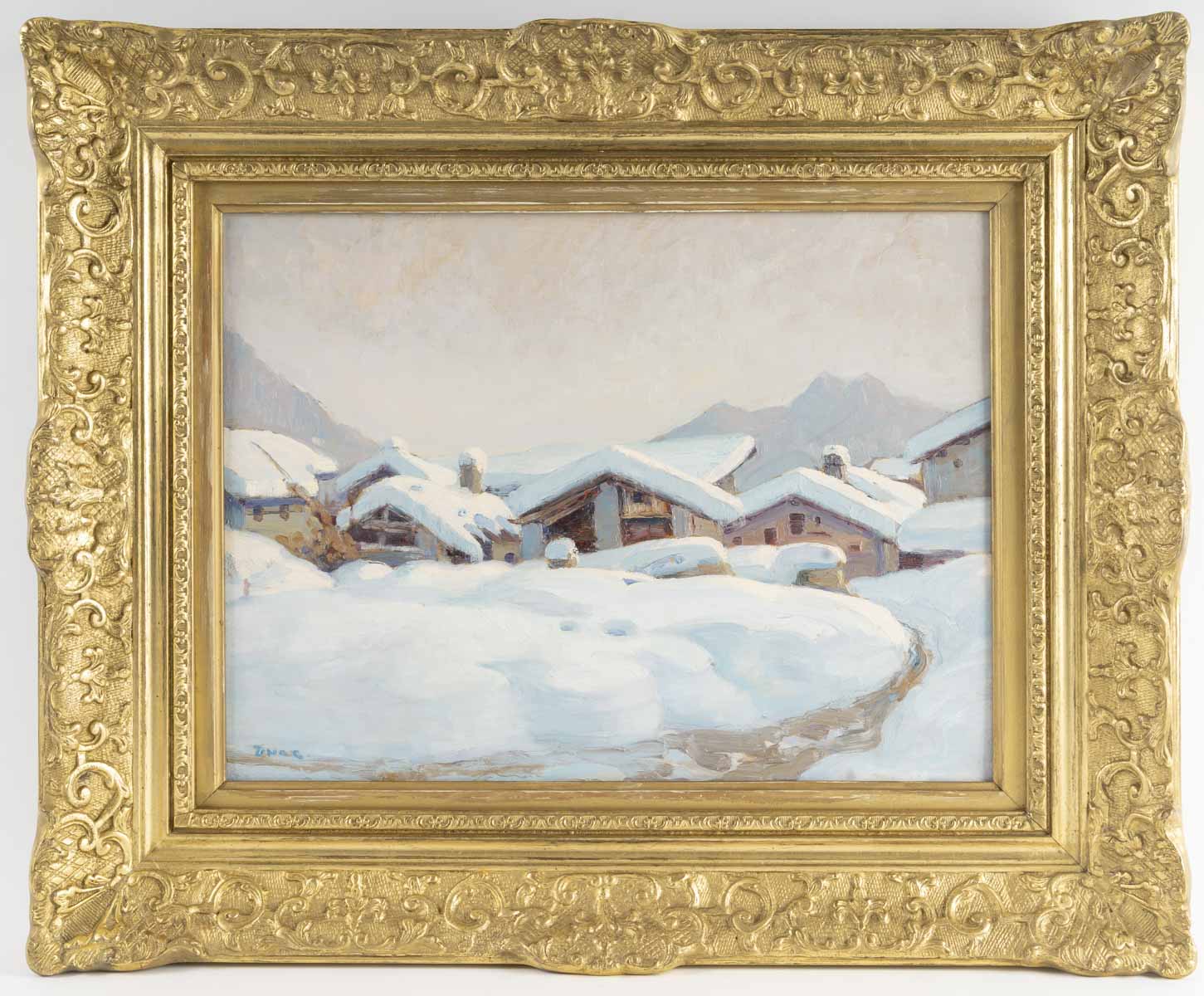
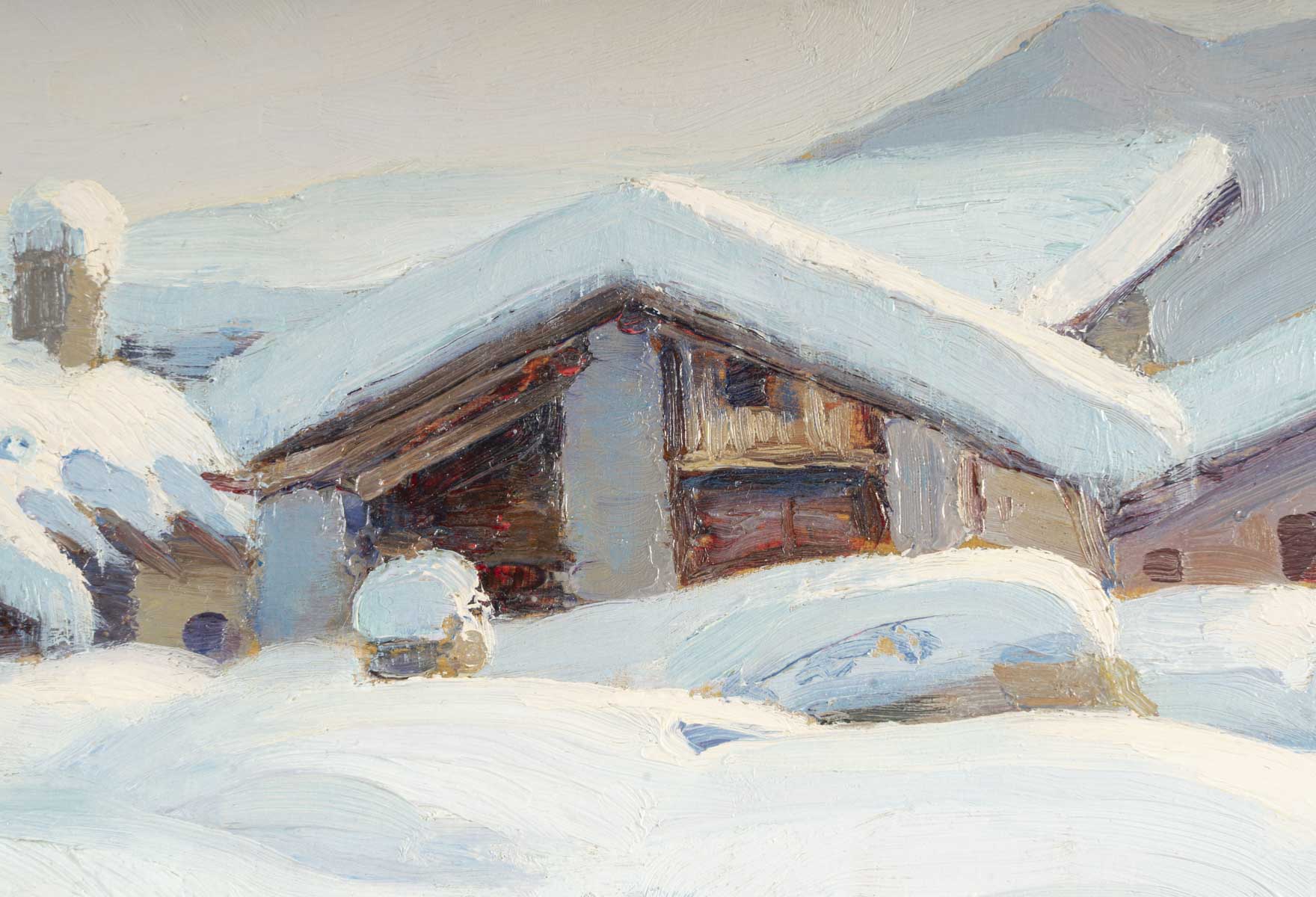
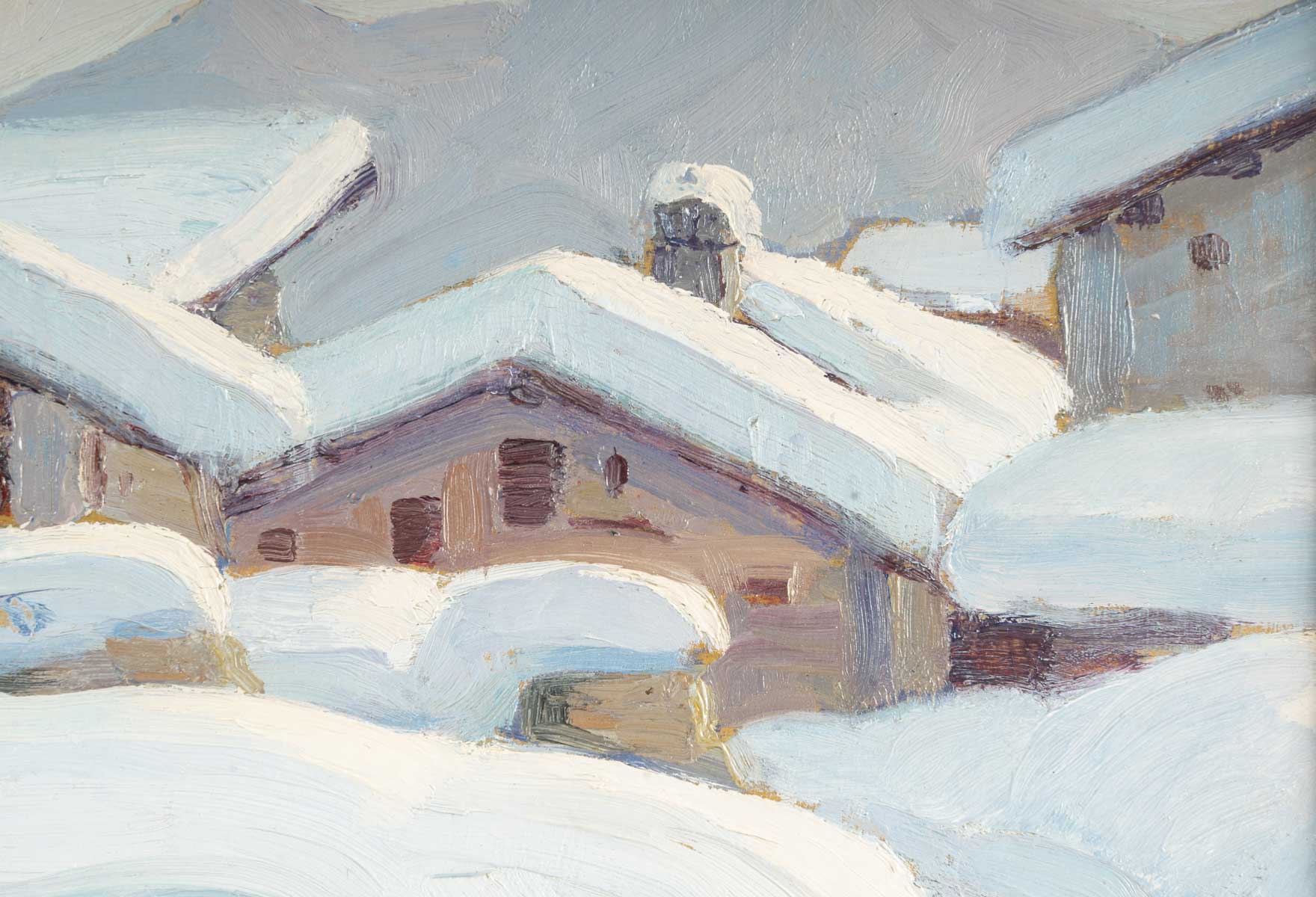
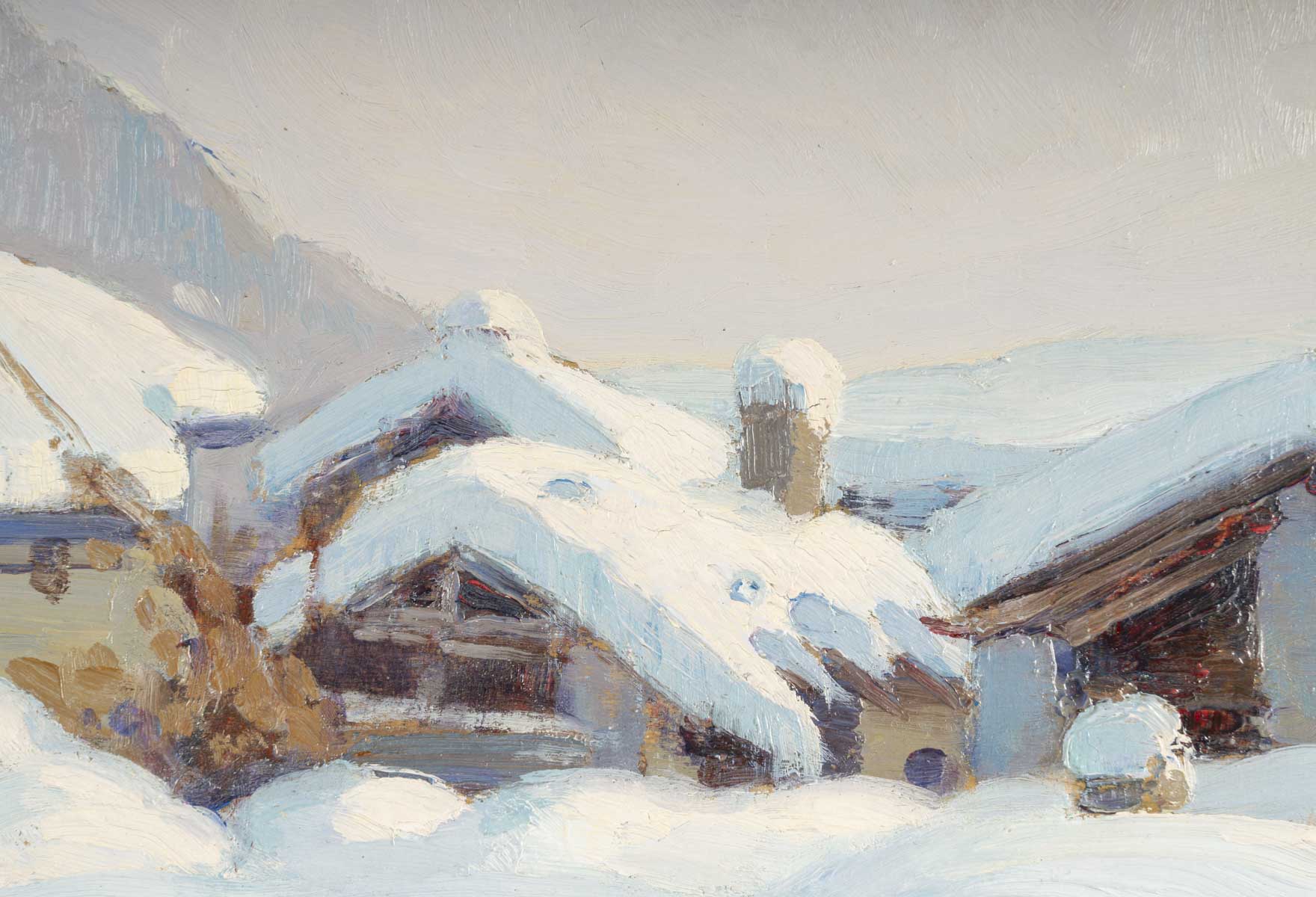
A luminous snowscape in the thick, creamy brushstrokes of Franc-Comtois post-impressionist painter Jules Emile Zingg.
Oil on panel
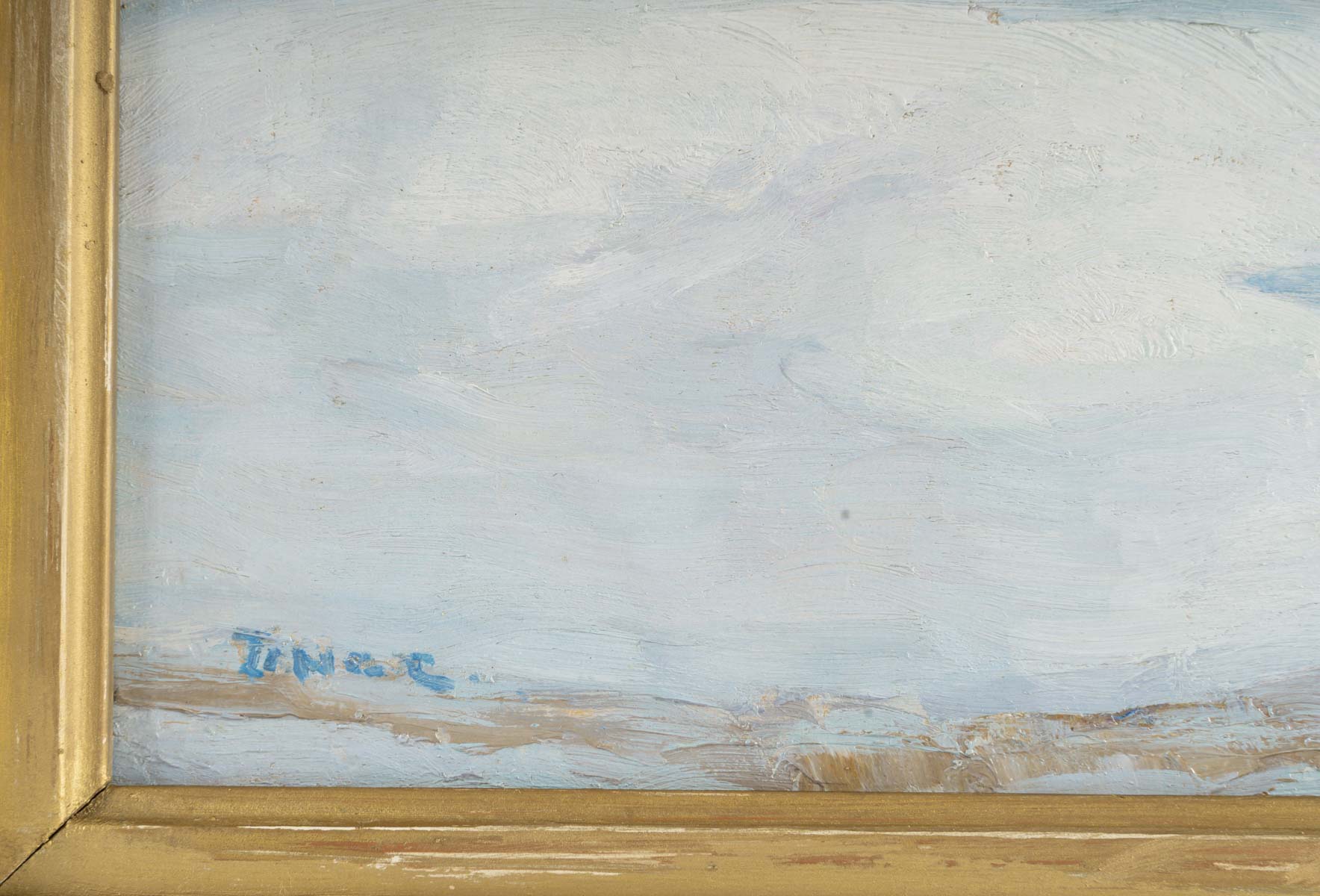
Signed lower left
Dimensions: 33 x 44 cm
With frame: 51 x 62 cm
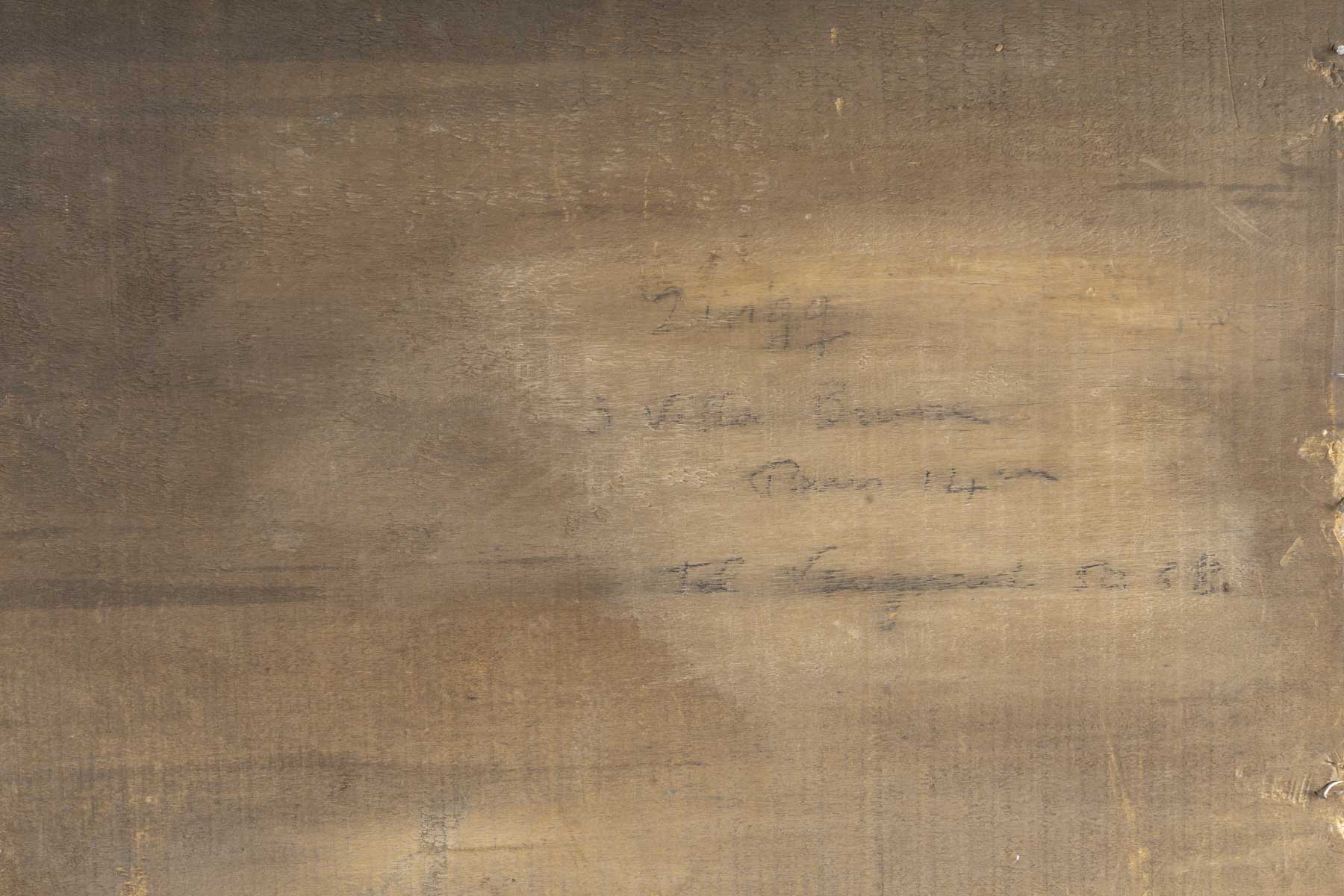
Inscription on the back: Zingg et adresse de son atelier : Villa Brune Paris 14 ème
Price : 4500 euros
Jules Emile Zingg, a painter appreciated by the moderns of his time
Zingg loved freedom, and in 1913 decided to leave the capital and the teaching of masters considered too classical and boring. His new models were Bonnard, Seurat and Cézanne.
By chance, he discovered Brittany and the Pink Granite Coast. There he met Maurice Denis and Paul Sérusier. This was a decisive moment in his career, and his painting, influenced by wood engraving, became simpler and more synthesized.
The snowscape, one of his favourite subjects
It is often under a thick blanket of snow that the painter likes to depict the landscapes of his heartland, Franche Comté, but also those of the Vosges, Jura or Auvergne.
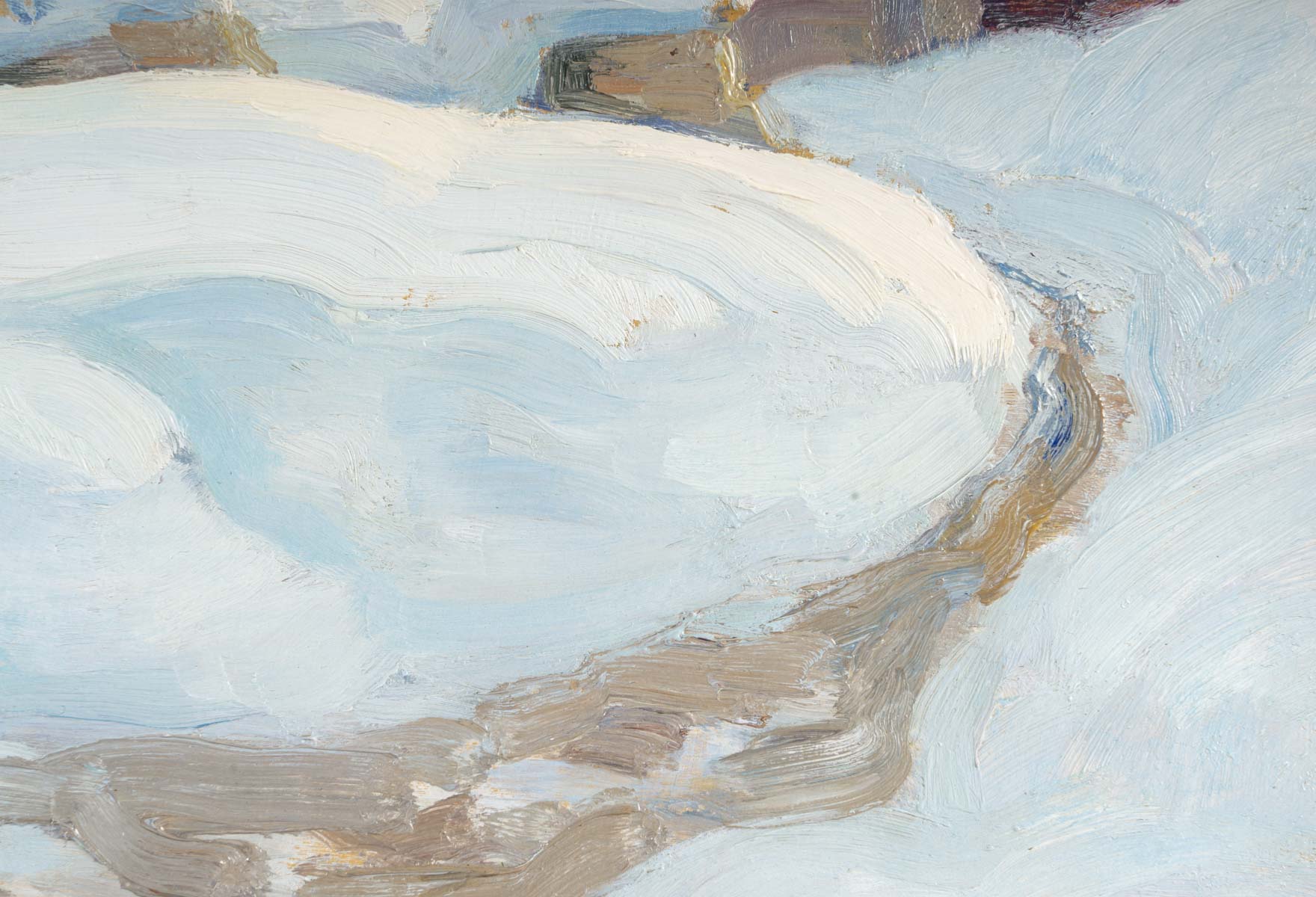
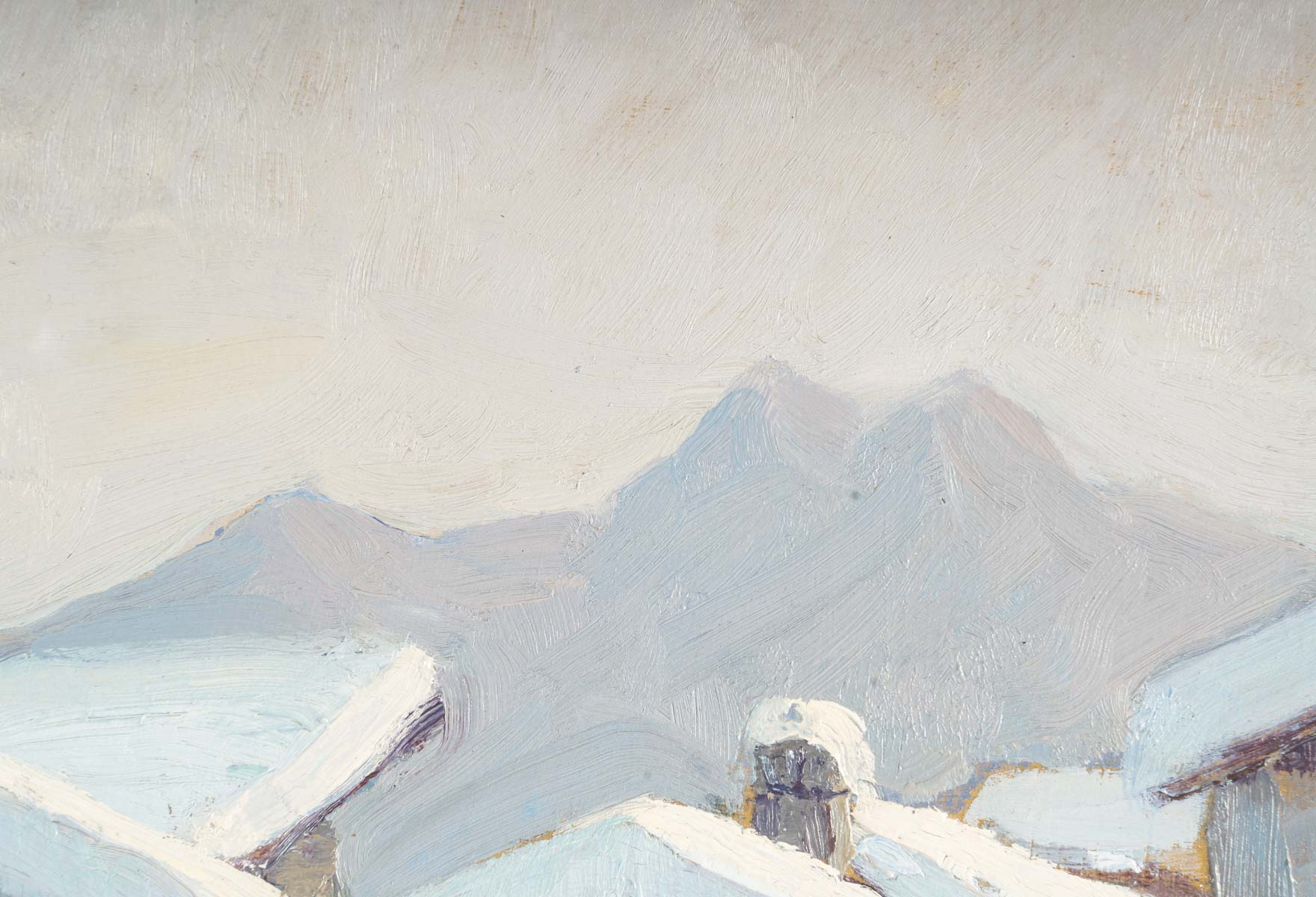
In our painting, he paints the snow in thick layers that erase the drawing. You can enter into the thickness of the material. The snow is tinged with blue and pink, reflections of the light in the sky.
Biography
Jules-Émile Zingg, born in Montbéliard and died in Paris, was a French painter, decorator and engraver. The son of a watchmaking family in Franche-Comté, he abandoned a promising career in his father’s workshop to become a painter.
Zingg enters Félix Giacomotti’s studio at the École des Beaux-arts de Besançon, where he stays for a year.
On November 8, 1902, he was admitted to Fernand Cormon’s studio at the École des Beaux-Arts in Paris. He specializes in landscape painting. He was second prizewinner in the 1911 Prix de Rome and won a national prize.
At the beginning of 1917, he left as a volunteer with Vuillard, as a painter with the Armies on the Eastern Front. Paradoxically, it was there, by sharing the dangerous life of the combatants, that his painting found new vigor.
In 1918, Jules-Émile Zingg exhibited at the Galerie Druet in Paris. He meets Maurice Denis and Paul Sérusier in Perros-Guirec,
He was won overwelmed by the decorative aspect of Nabis painting. Following this encounter, his style developed with an economy of means.
From the time of his exhibition at Galerie Druet, Jules Emile Zingg gained a certain notoriety He went on to exhibit his work in major galleries in Paris and abroad.
In 1926, the “Société Belfortaine des Beaux-Arts” was founded, which organized major exhibitions at Belfort’s museums every year until the Second World War, in which Jules-Émile Zingg took part along with Georges Fréset, Jacques-Émile Blanche, Jean-Eugène Bersier, Raymond Legueult, Anders Osterlind, Henry de Waroquier and René-Xavier Prinet.
Museums
– In Cosne-sur-Loire, some twenty works are preserved in the museum, at following a bequest from Émile Loiseau in 1970, including his portrait by Jules-Émile Zingg.
– Gray (Haute-Saône), Baron-Martin museum.
– Meudon, art and history museum.
– Montbéliard, art and history museum
Source
https://fr.wikipedia.org/wiki/Jules-Émile_Zingg
https://bretagne-expertises.com/julesemile-zingg

