
Jean Laurent Buffet Challié
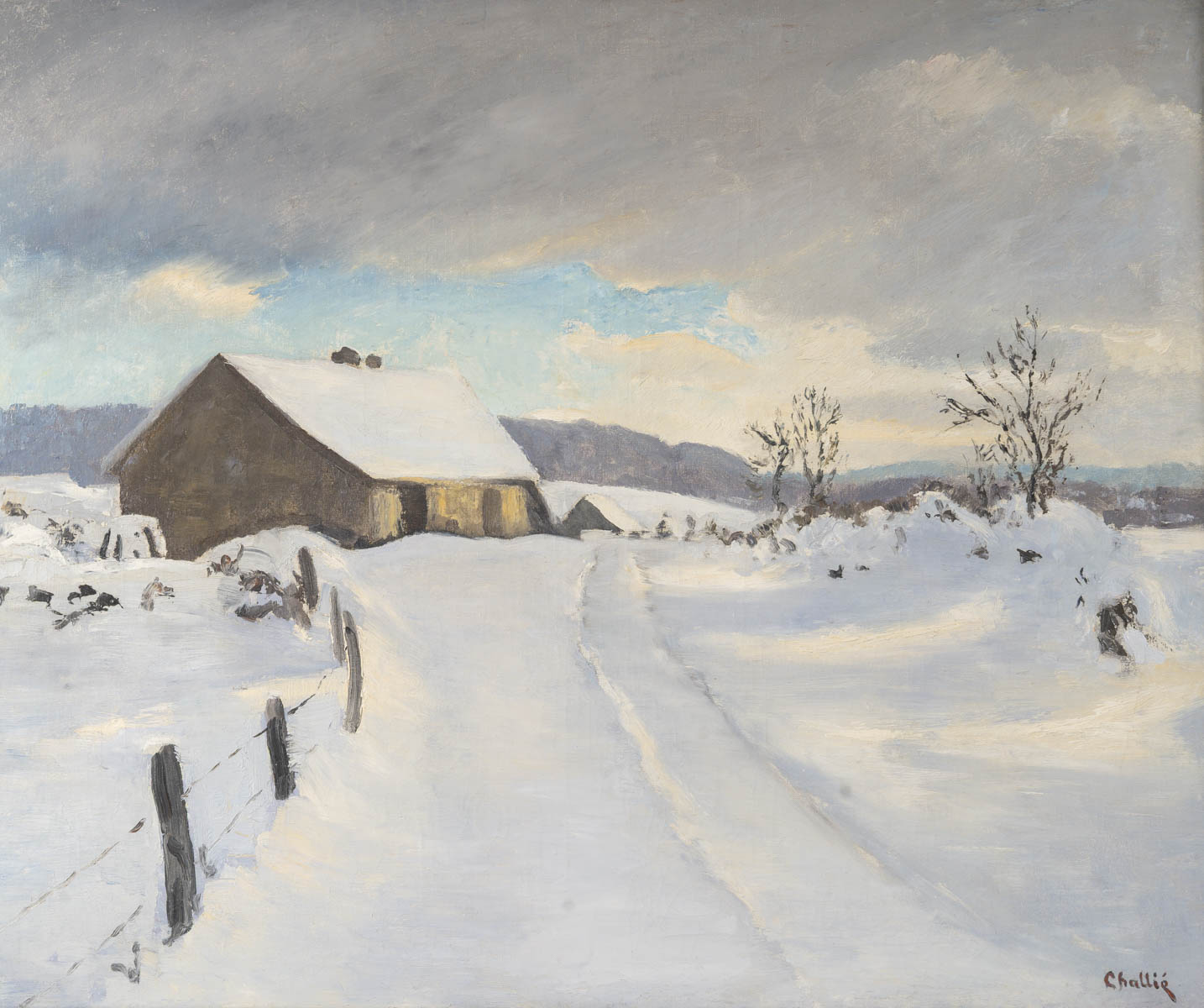
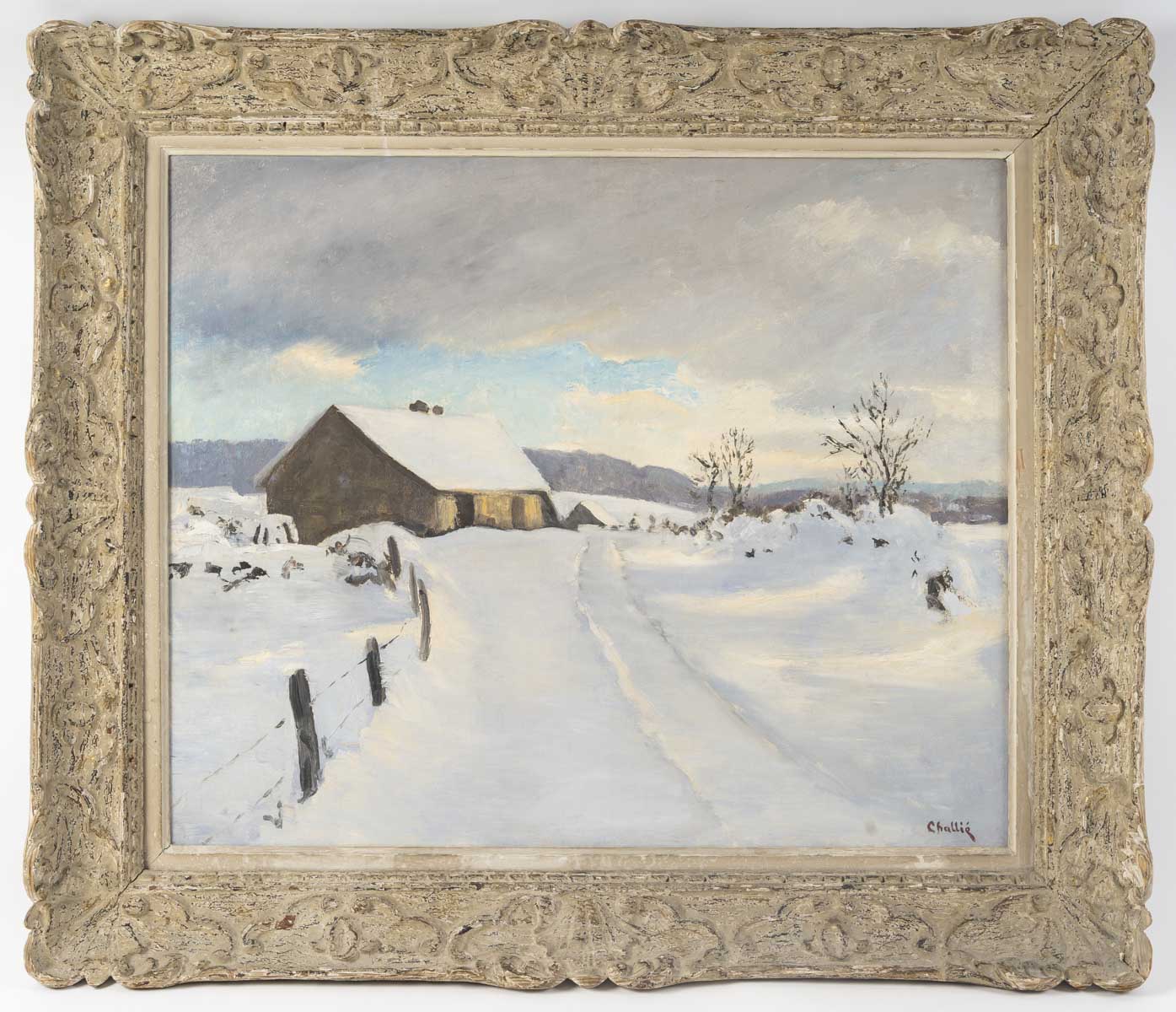
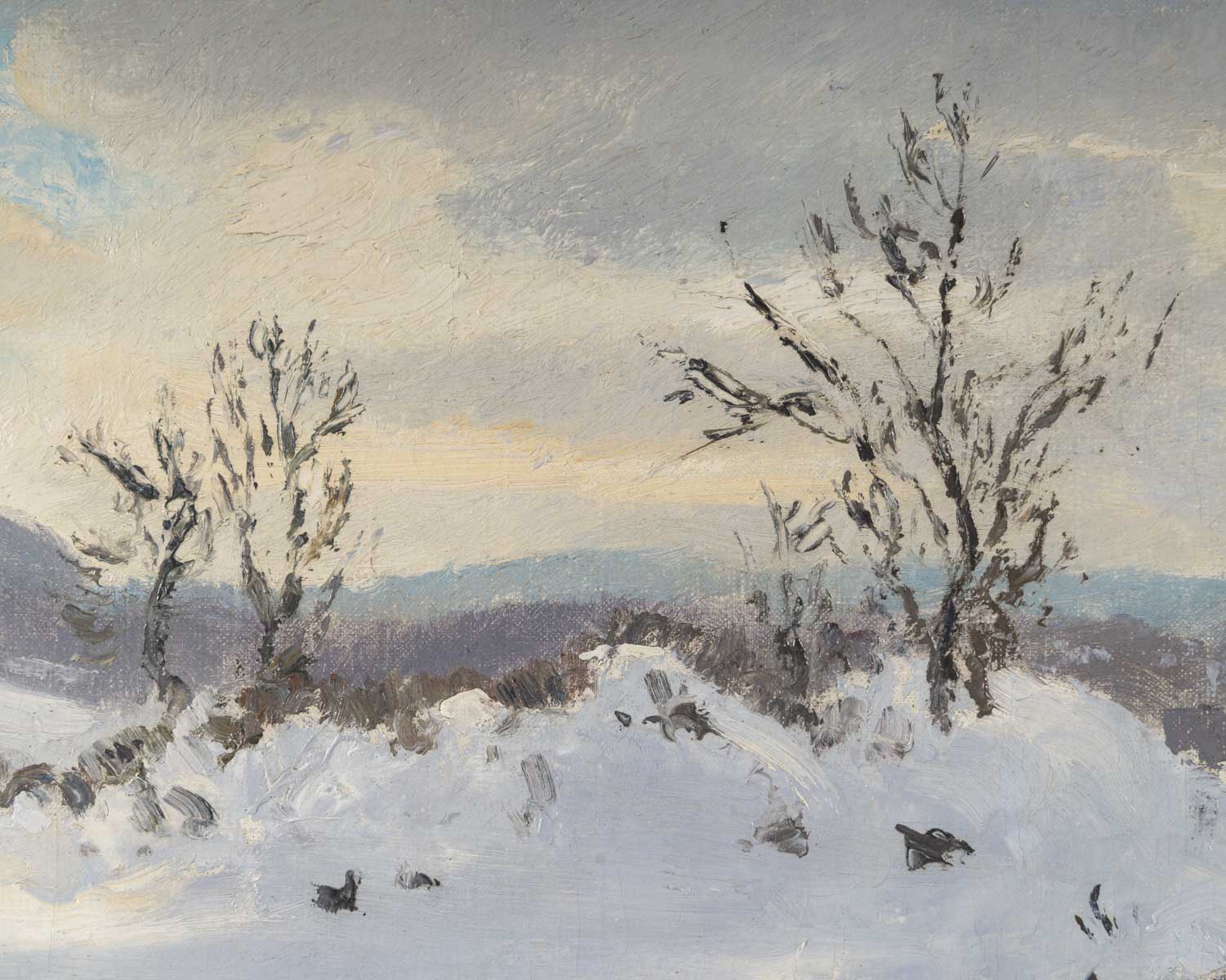
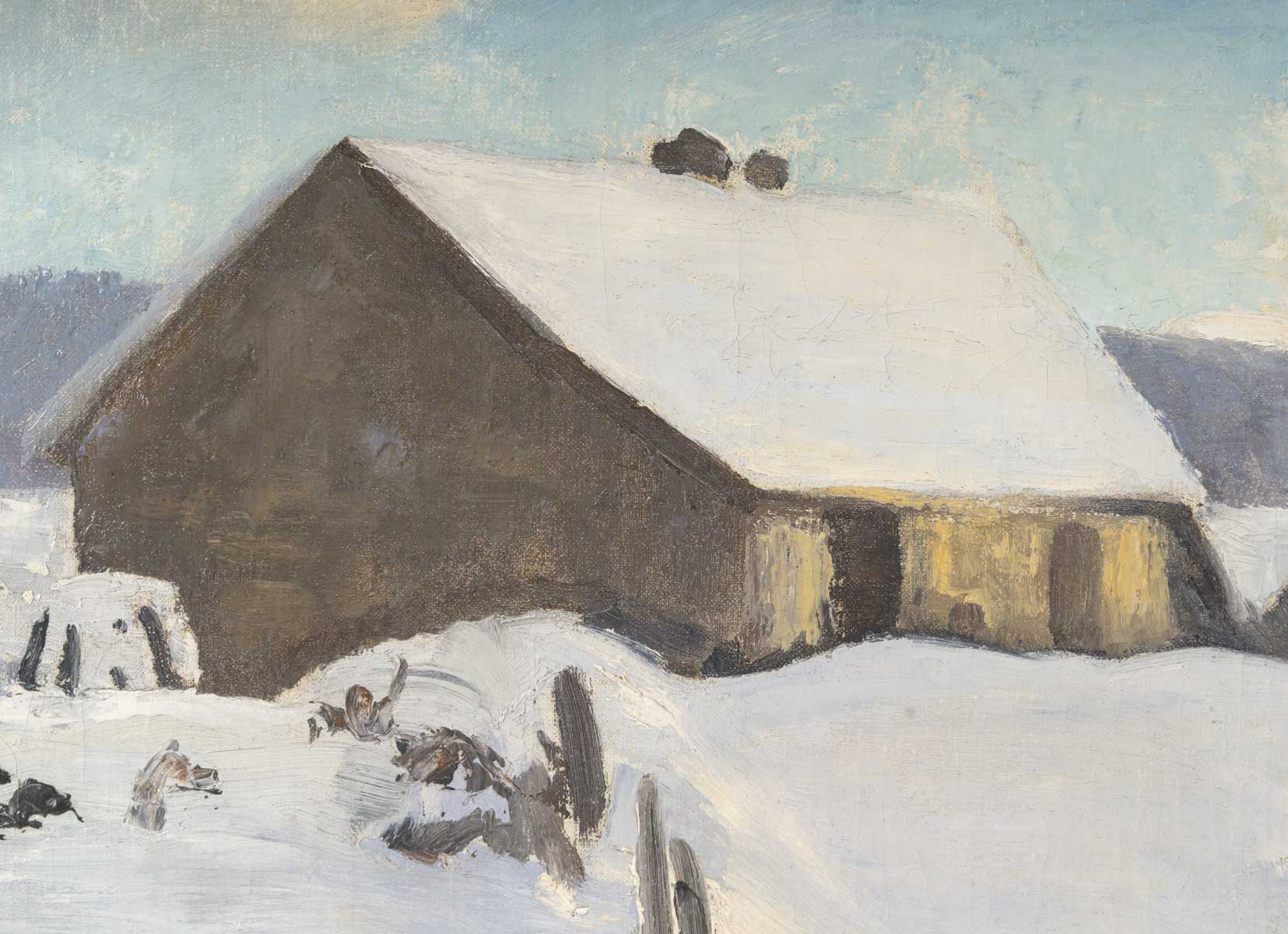
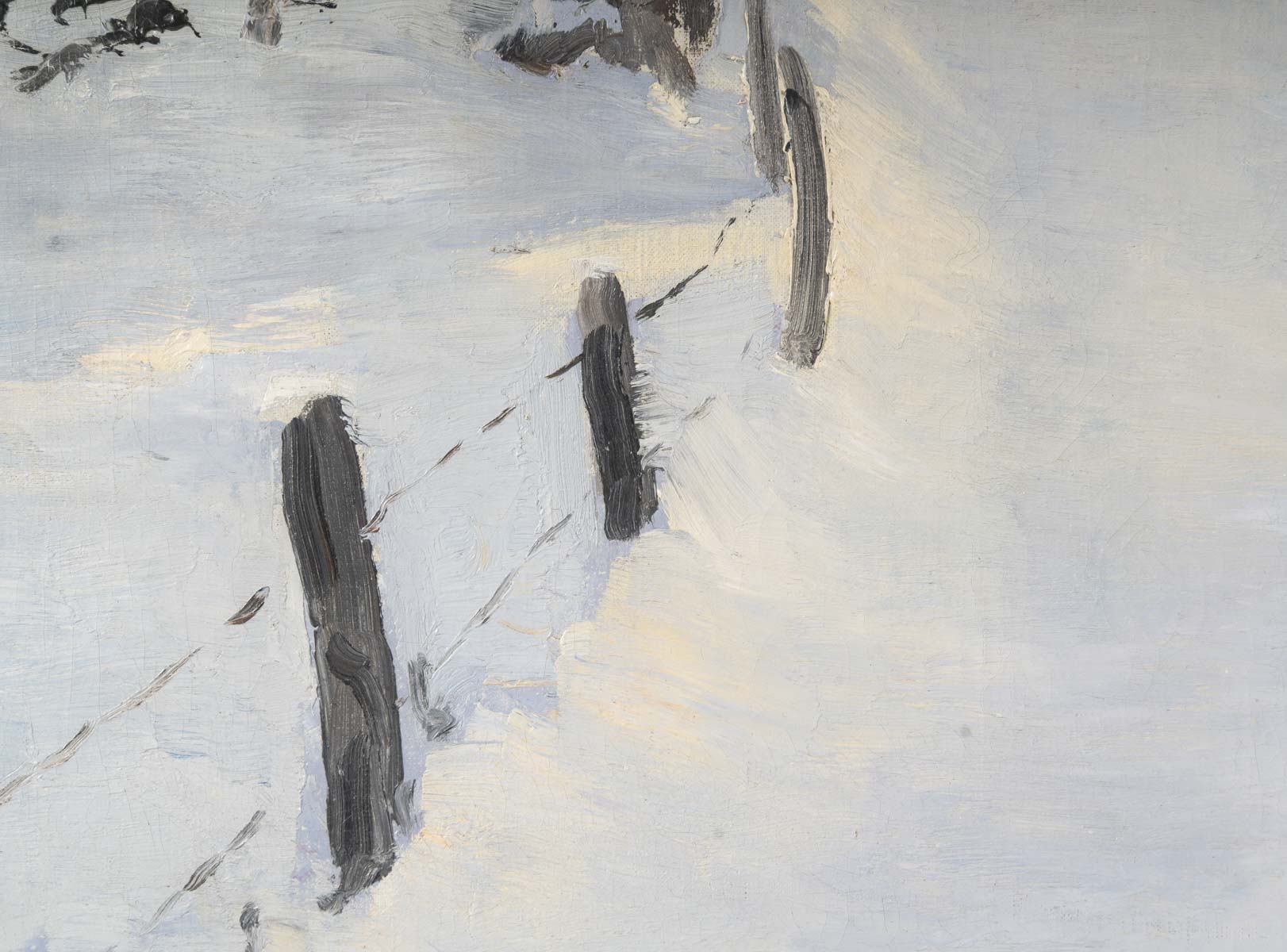
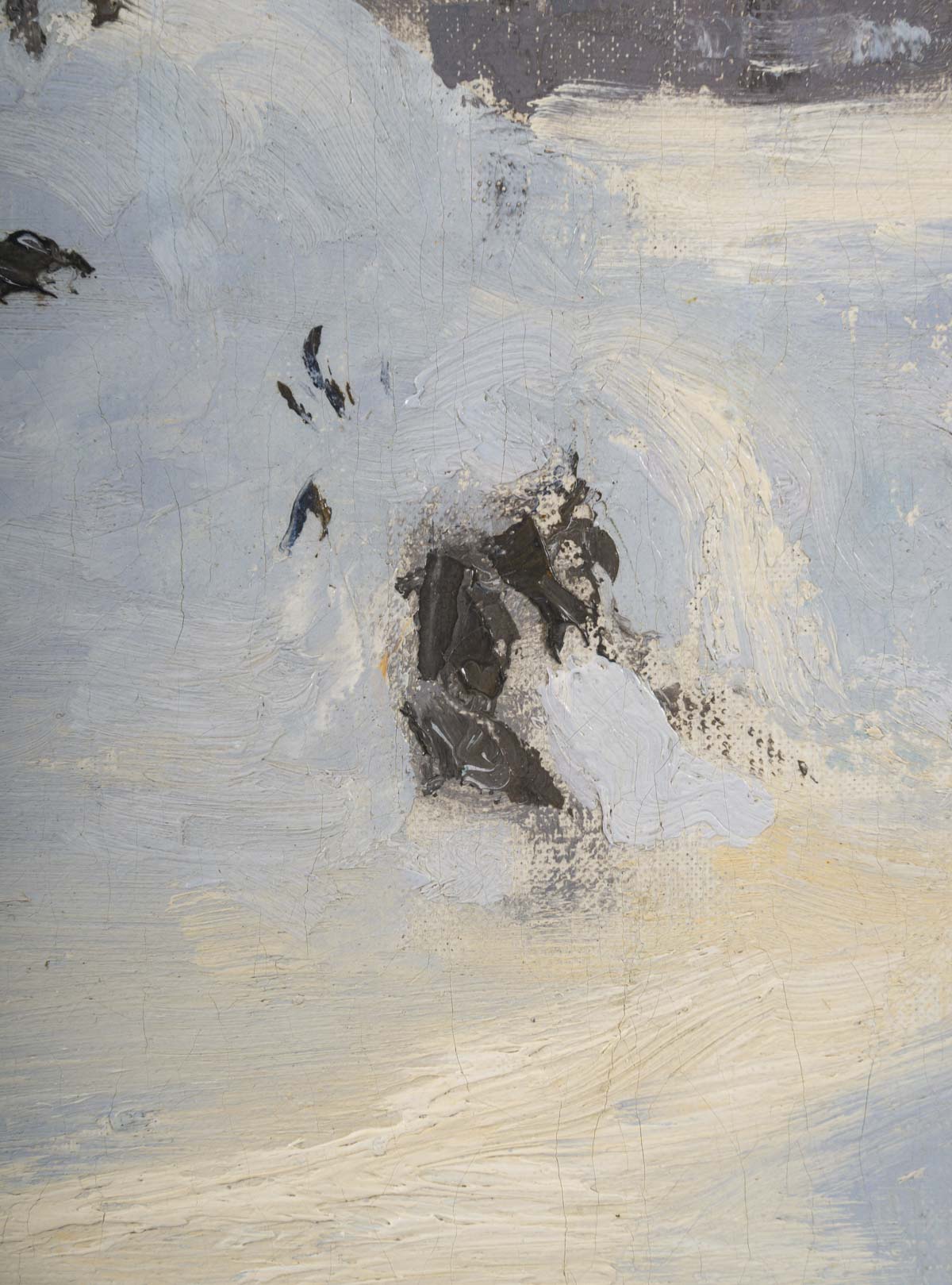
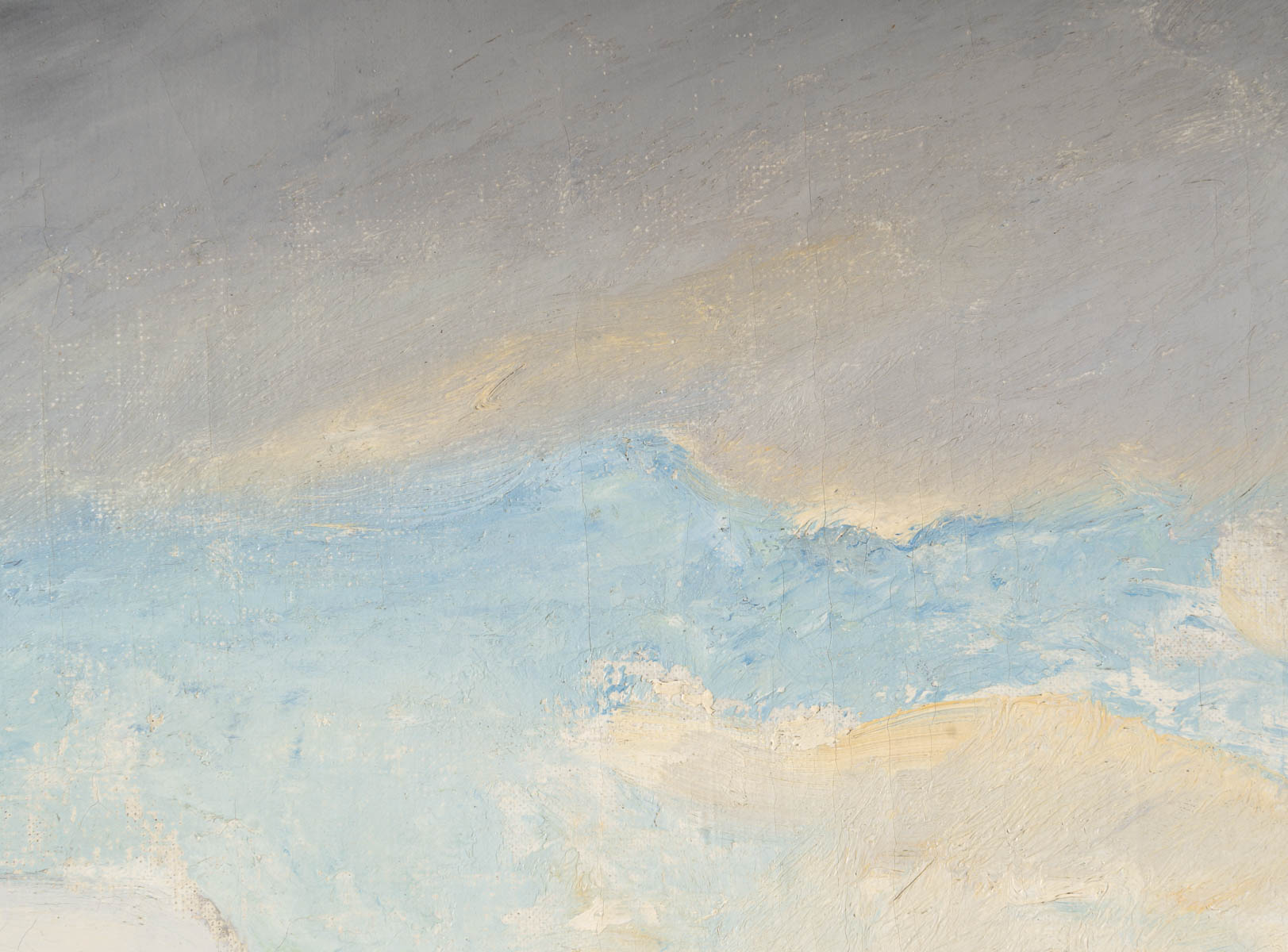
A Jura snowscape by painter Jean Laurent Buffet Challié. A post-impressionist painting, with a modern, light and unctuous touch.
Oil on canvas
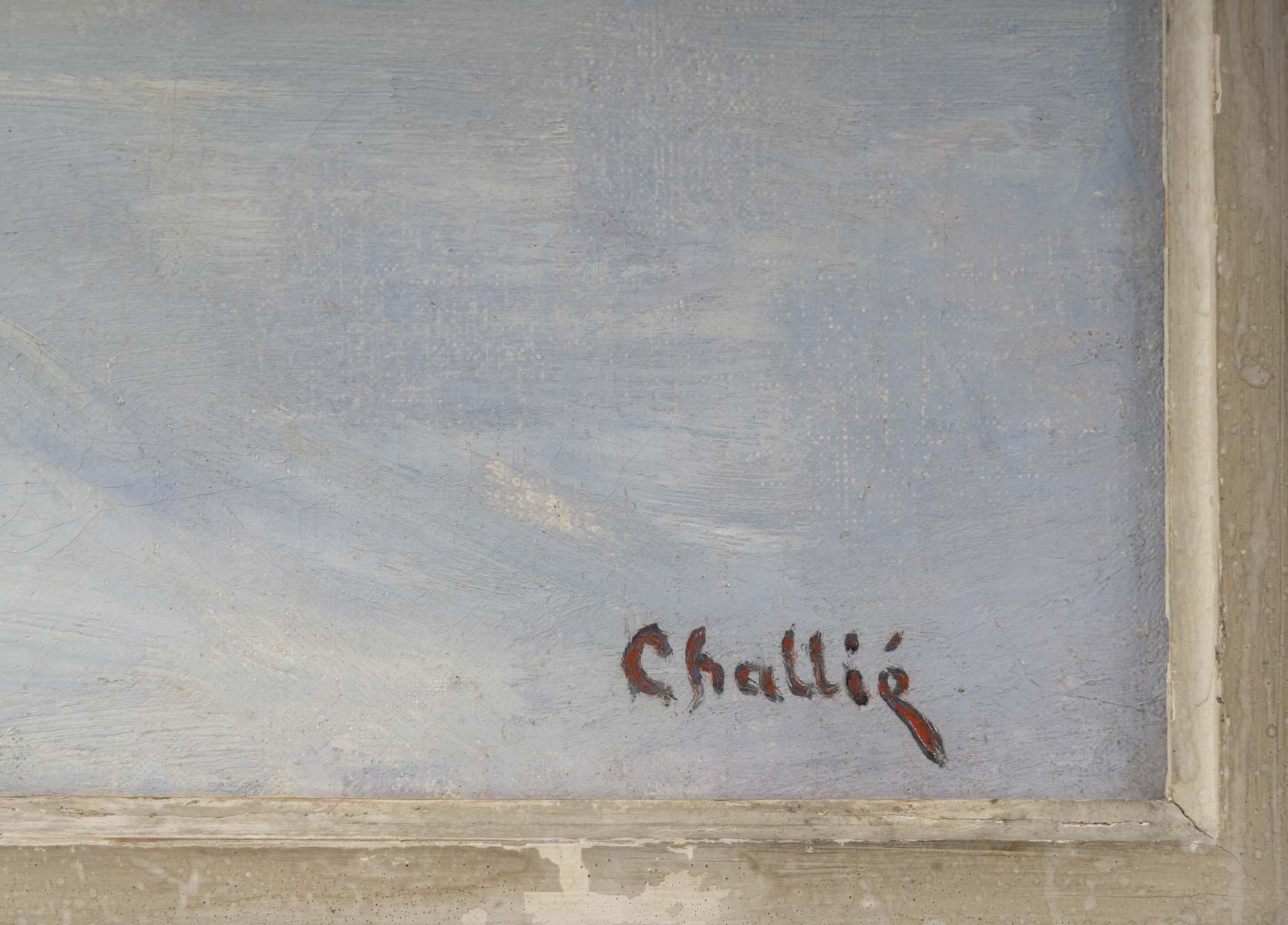
Signed lower right
Dimensions: 67 x 74 cm
With frame: 80 x 94 cm
Sold
The wilder it is,” he writes, “the more deserted it is, the less lost I feel ” Jean Challié.
Jean Laurent Buffet Challié, a painter in search of what’s right and essential, in love with nature and freedom.
Allergic to theories, he quickly moved towards more emotional than intellectual representation and, like Derain, considered culture to be “a real danger to art”. He has a love of freedom and non-conformism.
With this landscape of the Jura, dear to his heart, Jean Challié is not seeking to seduce, but rather to convey the right emotion and authenticity in the face of a landscape that moves him.
Courbet used to say: ‘I have a country and I paint it’. The same is true of Jean Chaillé, who paints scenes of fieldwork, forests, snowy landscapes and family life in the Jura.
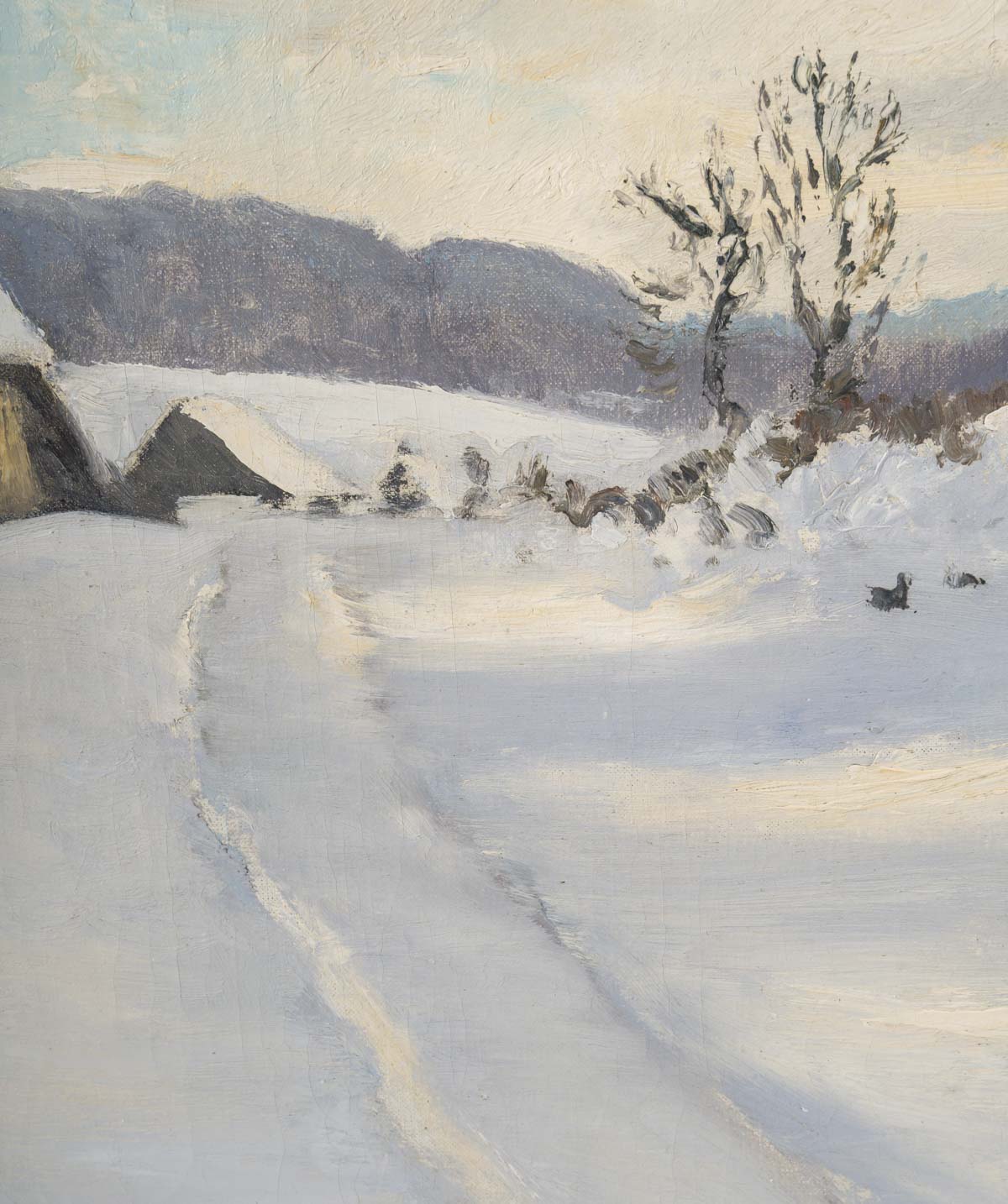
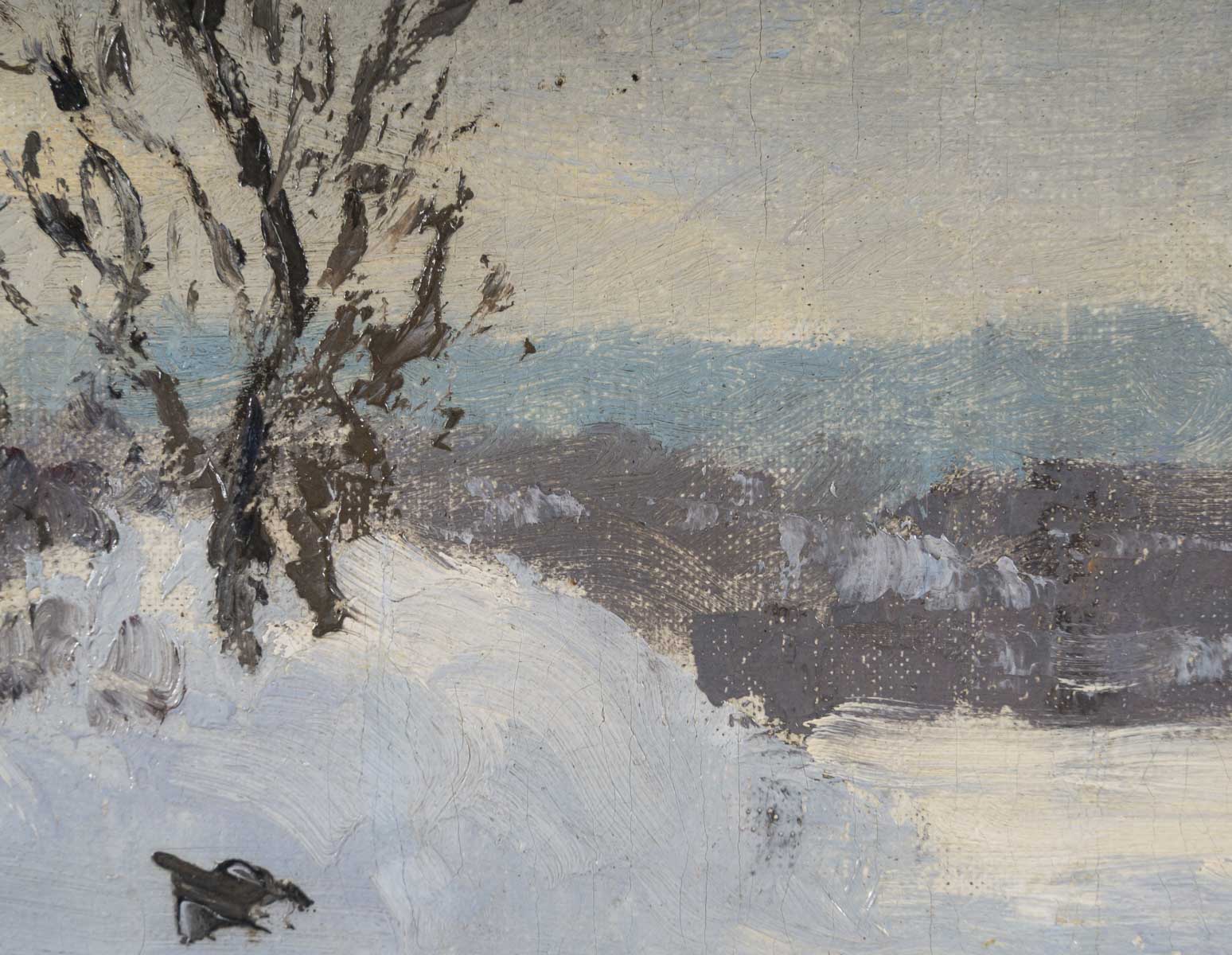
Snowscapes and art; here an authentic Jura snowscape combining lightness of touch and smoothness of paste.
Artists have long been fascinated by the beauty of winter, the season that covers everything in its white mantle and seems to freeze time. The Impressionists were particularly fond of painting this material, which allowed them to work on the play of light and reflection in the snow.
Here, the landscape is devoid of any human presence. We are immersed in this pure, silent troid landscape. A patch of blue sky in the cloudy sky illuminates the snowy mantle in places. His touch is modern, light and unctuous.
Biography
Jean -laurent Buffet-Challié was born in Echenoz la Méline, Haute-Saône. Born into a middle-class family, his father was from the Jura and his mother from Paris. They lived in Paris, but frequently vacationed in Etival, a small village in the Haut-Jura region.
Every summer, from 1884 onwards, the family gathered in the old family home, part farm, part manor house. From the terrace behind the house, the view stretches out over pastures dotted with herds and cultivated fields, with the reassuring Jura horizon beyond, covered in beech and fir trees. For the children, it’s happiness, a new-found freedom – a freedom that Jean will always cherish. A world of sensations that would become engraved in the memory of a four-year-old boy, imbuing his imagination and sensitivity and influencing his future paintings.
Training
As the years went by, his parents had to face up to the fact that Jean had no taste for traditional studies or for a military career, as his father had wished. From adolescence onwards, art was his reason for living, and nothing could divert him from his chosen path.
At 17, he attends the Atelier Gérôme with Fernand Léger. He draws with Picasso and Fernand Léger at the Médrano circus.
He began to receive mentions and awards in 1900.
He moved to the Villa des Arts in Paris in 1904 and became friends with Raoul Dufy, with whom he painted and drew in Montmartre.
From 1903 to 1909, he refused to participate in artistic events. In 1907, he said: “The greatest error in the arts is to believe in spheres too high for the profane.
In 1904, he moved to the Villa des Arts in Paris and met Picabia, who was to become his brother-in-law.
1909 marked his return to the Salon des Indépendants, the Salon d’Automne and the galleries…
Initially post-impressionist from 1903 to 1907, he entered a Fauvist period from 1908 to 1910. The last period of his life, from 1910 to 1943, was essentially intimist.
He was mobilized in March 1914. Gassed in 1915, he was discharged in 1917. He then settled with his family in Etival, and painted scenes of work in the fields, forests, snow and family life.
In 1920, he returned to Paris and resumed exhibiting.
In 1939, with the outbreak of war, he returned to the Jura. In 1942 he returned to his Paris studio and took part in a final exhibition.
He died in 1943 of pulmonary complications following a bout of influenza.
Throughout his career as a painter, he exhibited alongside some of the greatest names: Picasso, Bonnard, Denis, Valloton, Valtat, Camoin and Vuillard.
Madame Laurence Buffet-Challié has published a monograph on her father Jean Challié, for which she was awarded the Prix Lucien Febvre 2005.
Source
https://racinescomtoises.net/index?/category/3171-jean_challie_1880_1943
http://deartibussequanis.fr/xx/challie.php

