




gen paul
The backgammon game, around 1927-1928
Oil on canvas
Signed and titled on the back “La partie de jacquet”
Dimensions: 81 x 65 cm
With frame: 105 x 88 cm
Price: €45,000
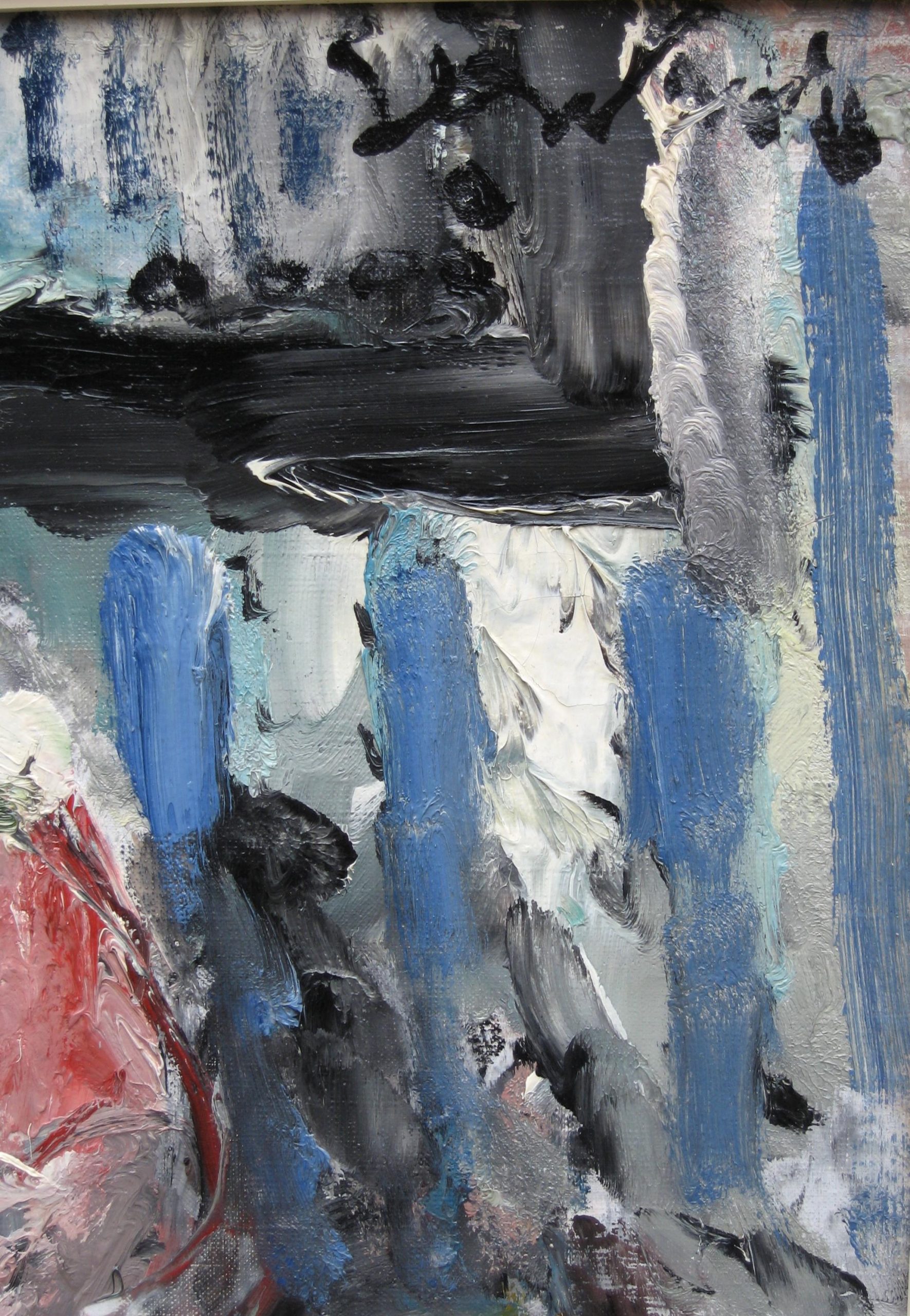
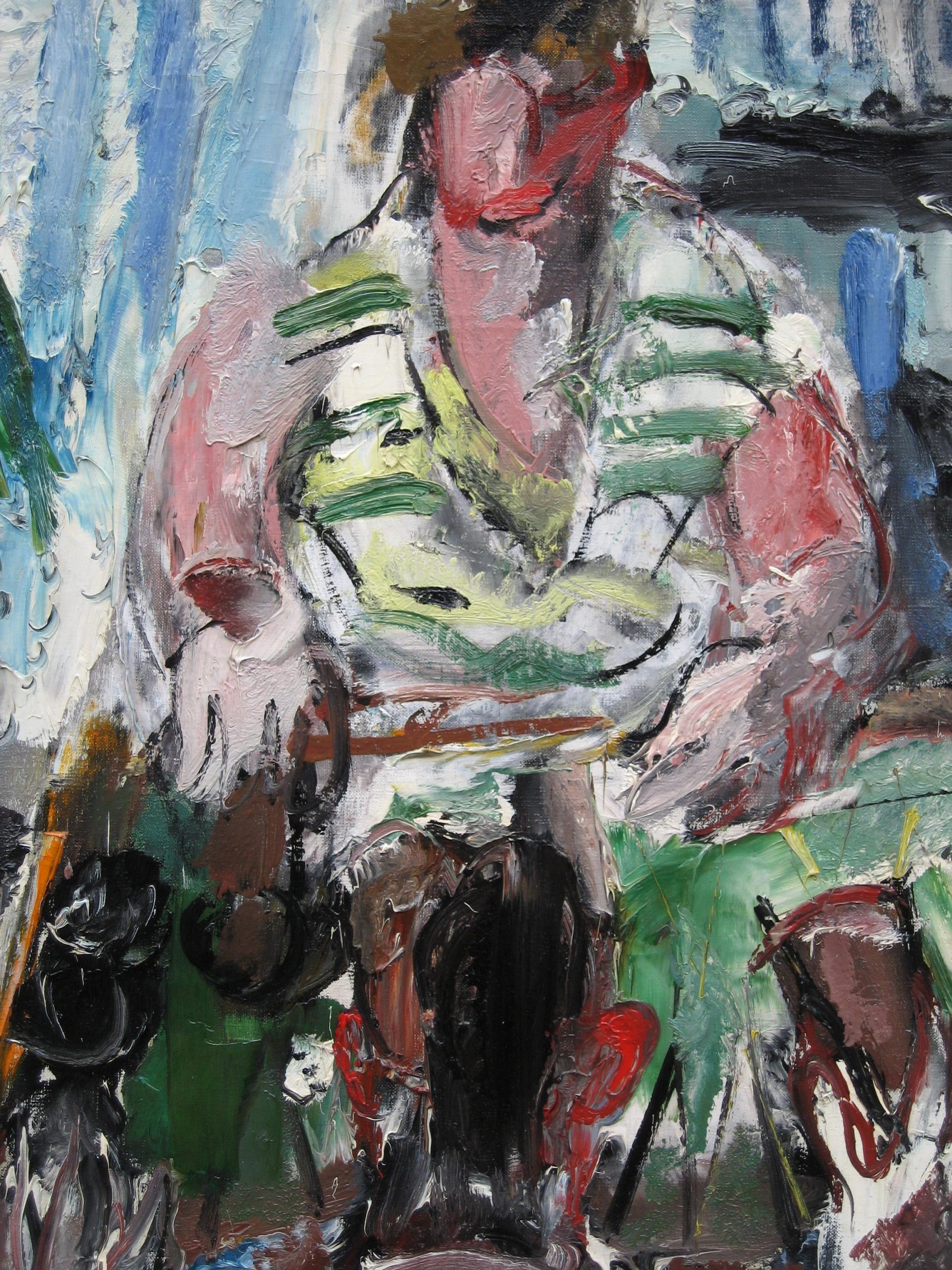
“Jacquet’s Game”, a striking, lively work by Eugène Gen Paul circa 1927-1928
This captivating painting depicts a backgammon game between two people, a man and a woman. The woman is seated in the background, while the man’s hands and head can be seen in the foreground. Gen Paul’s energetic brushstrokes and vivid colors breathe an infectious energy into this everyday scene. The figures are depicted in an abstract manner, giving the painting a modern, dynamic feel.
“Jacquet’s game is a testament to Gen Paul’s undeniable talent.
Biography
Eugène Paul was born rue Lepic, in the heart of Montmartre. His mother was an embroiderer and his father a café musician. He began painting at an early age. His apprenticeship is original: as an apprentice interior decorator, he looks around him in the rich apartments.
Passionate about painting and eager for knowledge, he observes the works collected by art lovers, wherever his work has taken him. He also learns about human anatomy by getting to know surgeons and accompanying them into operating rooms. He completed his training during the few years he spent at the École des Beaux-Arts in Paris.
In 1913, he volunteered for the front and was wounded. A year later, a second injury led to the amputation of his right leg. Back in Paris in 1916, he began painting. His first oil painting – the Moulin de la Galette seen from his window – dates from 1916. Eugène Paul began his career as a painter. It represents many views of Paris to satisfy demand.
He signed for the first time a painting “GEN-PAUL” in 1918. In 1920, he exhibited at the Salon d’Automne, and remained faithful to this institution, as well as to the Salon des Indépendants. He travels to Spain and is confronted with the masterpieces of the masters: Goya, El Greco, Velasquez… On his return, he makes even greater use of black in his compositions.
His first solo exhibition took place at Galerie Bing in 1926. He illustrated several books by Céline, including Voyage au bout de la nuit and Mort au credit in 1942. He made engravings, some of which were published in a collection entitled Vues de Montmartre .
At the end of the Second World War, he made frequent trips to the United States and New York. At the time, he held the rank of general. In 1952, the Drouant-David gallery in Paris devoted a retrospective to him.
Besides the annual events of the Parisian art scene (the Salons), Gen Paul exhibits only exceptionally. Indeed, the artist refuses to work with galleries, he does not depend on any of them. At the end of his life, he traveled frequently in France and Spain.
Museums:
Posthumous group exhibitions include:
. Galerie Roussard, Paris (1999)
. Galerie Roussard, Paris (2002)
Gen-Paul is exhibited in France,
. In Paris: National Center for Plastic Arts; City of Paris Museum of Modern Art; National Museum of Modern Art – Center Pompidou; Bourdelle museum
. In the provinces: Les Abattoirs, Toulouse

