
Lucien Simon
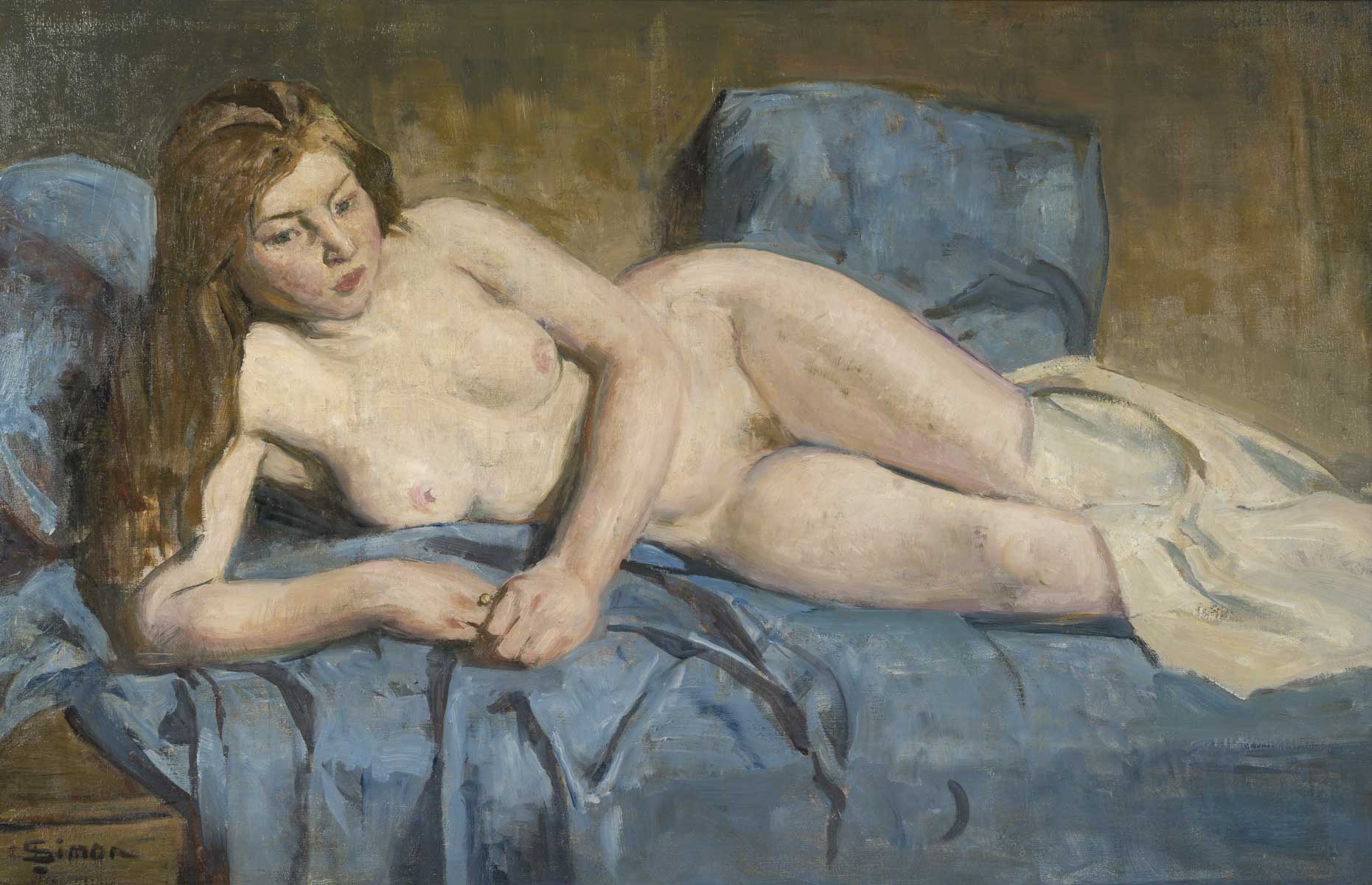
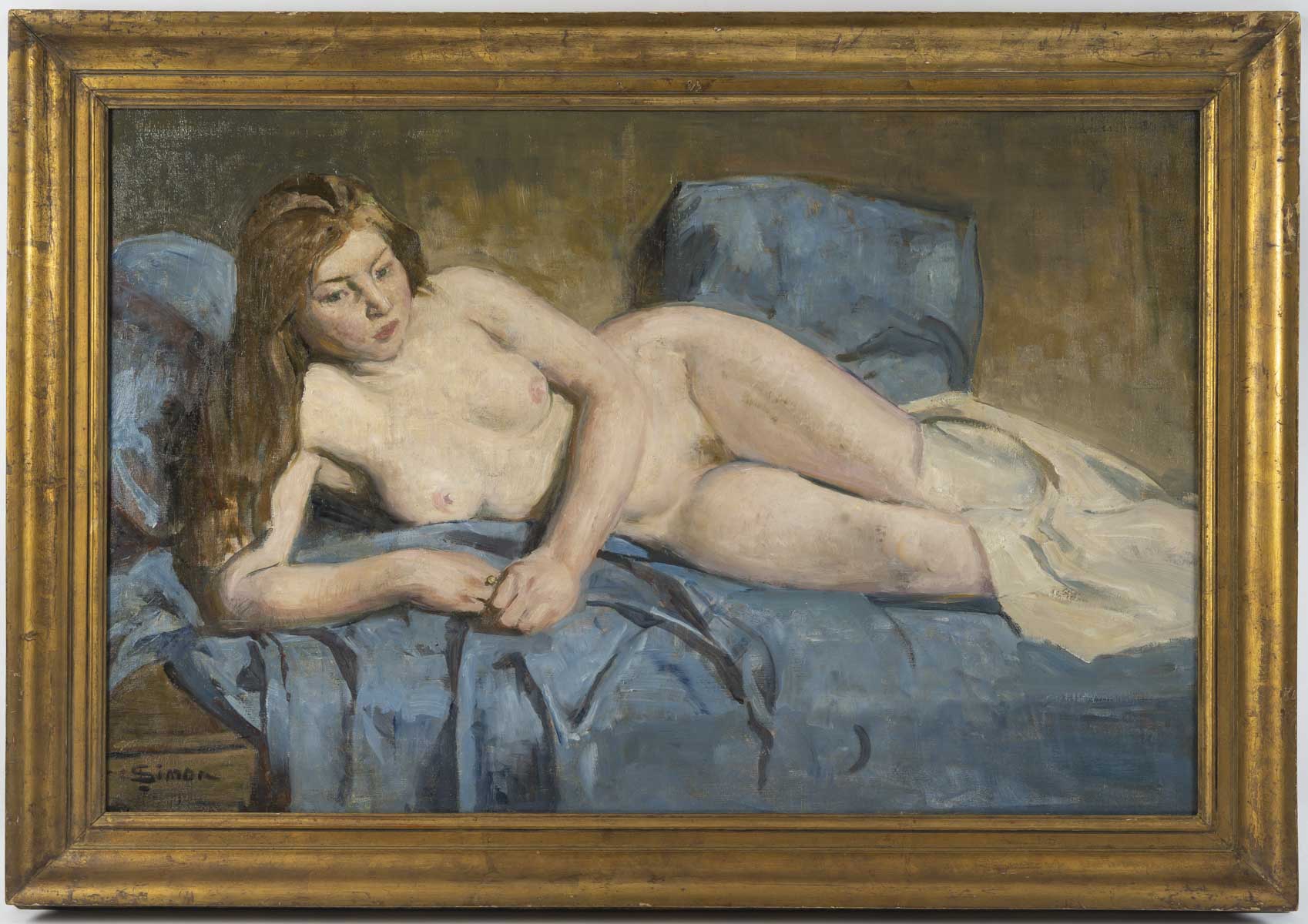
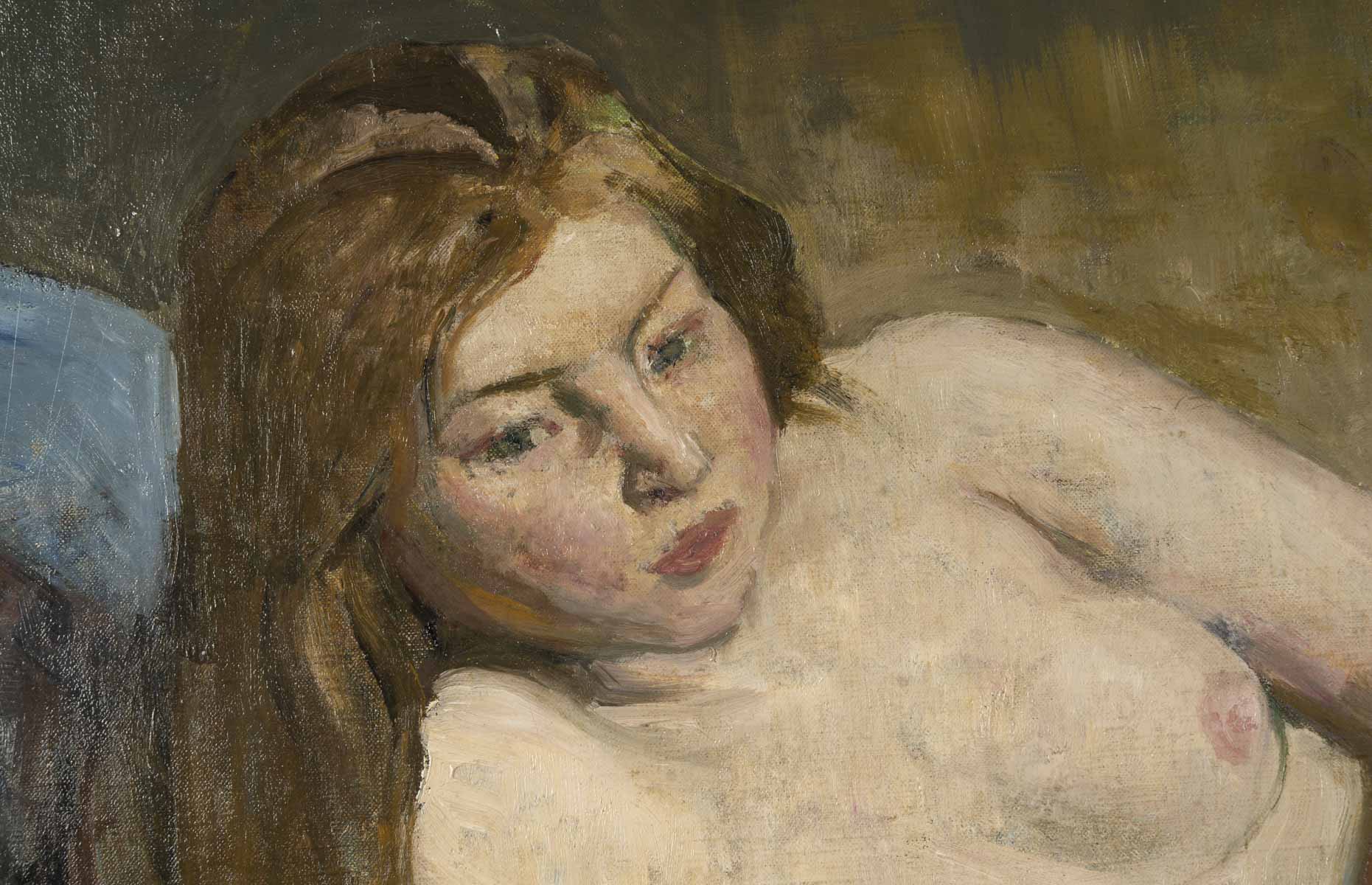
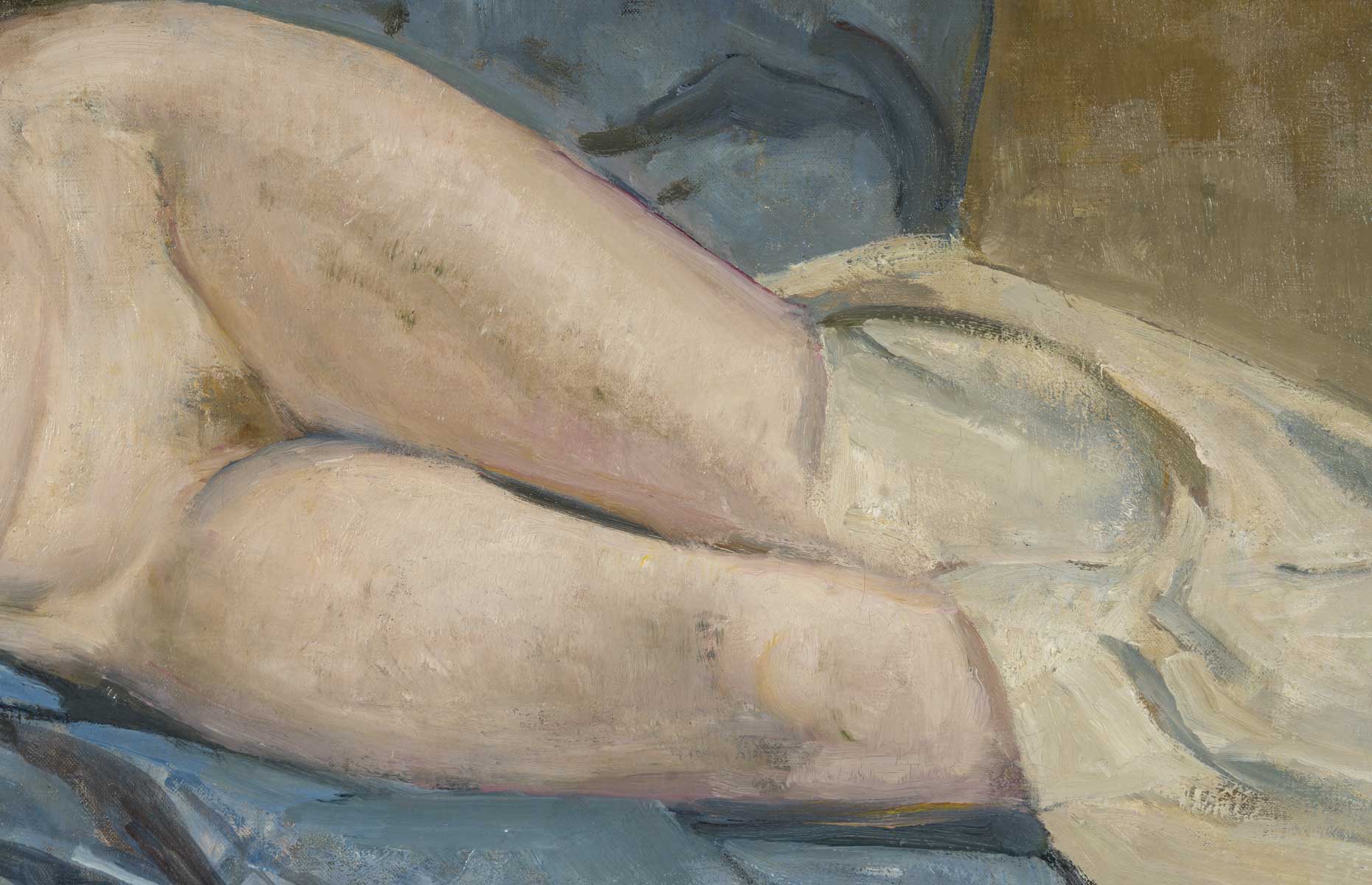
Lucien Simon delivers a sensual nude with a modern, sculptural touch.
Oil on canvas
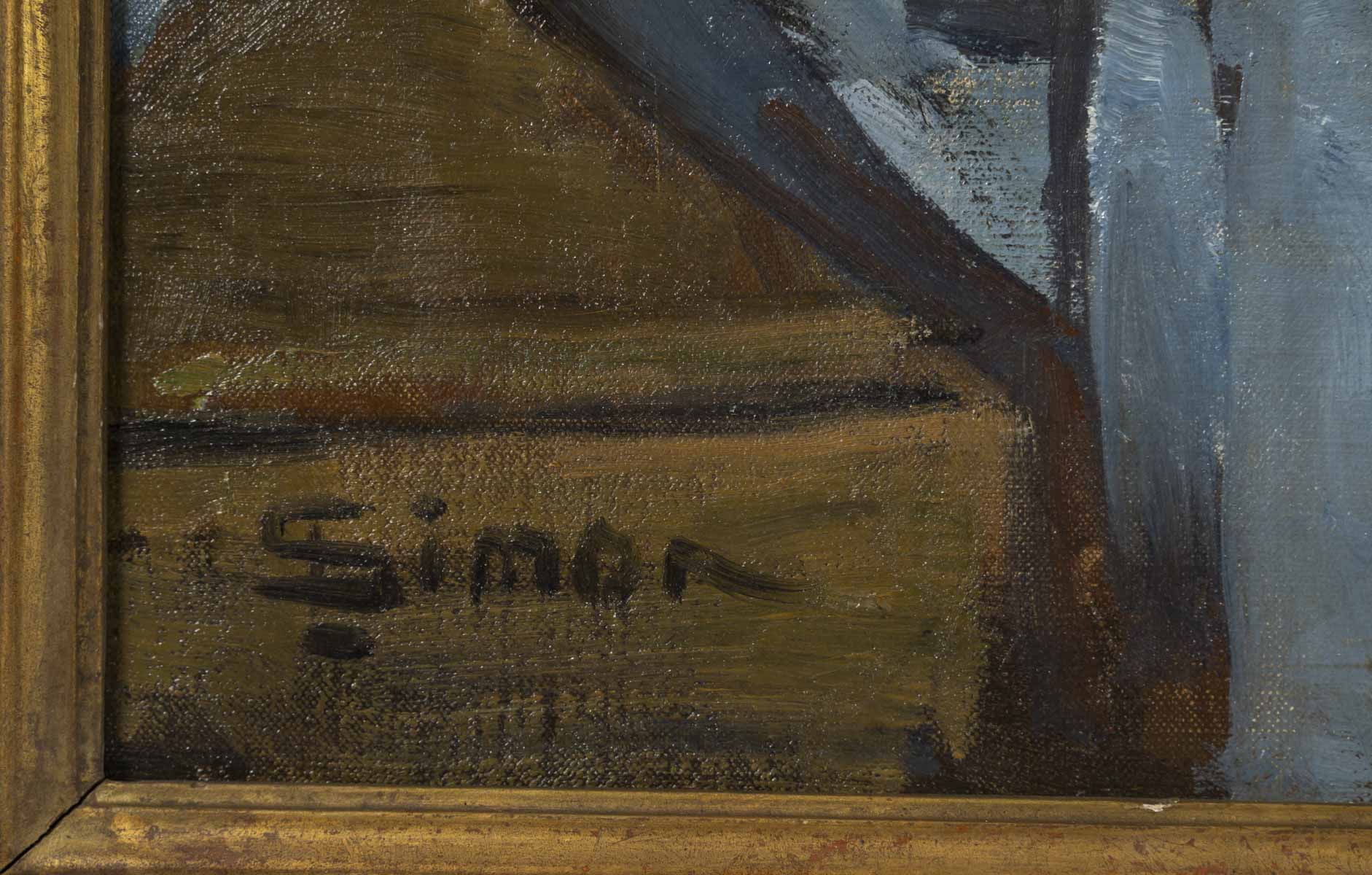
Signed lower left
Dimensions: 60.5 x 92 cm
With frame: 74 x 105 cm
Old label with exhibition number on back
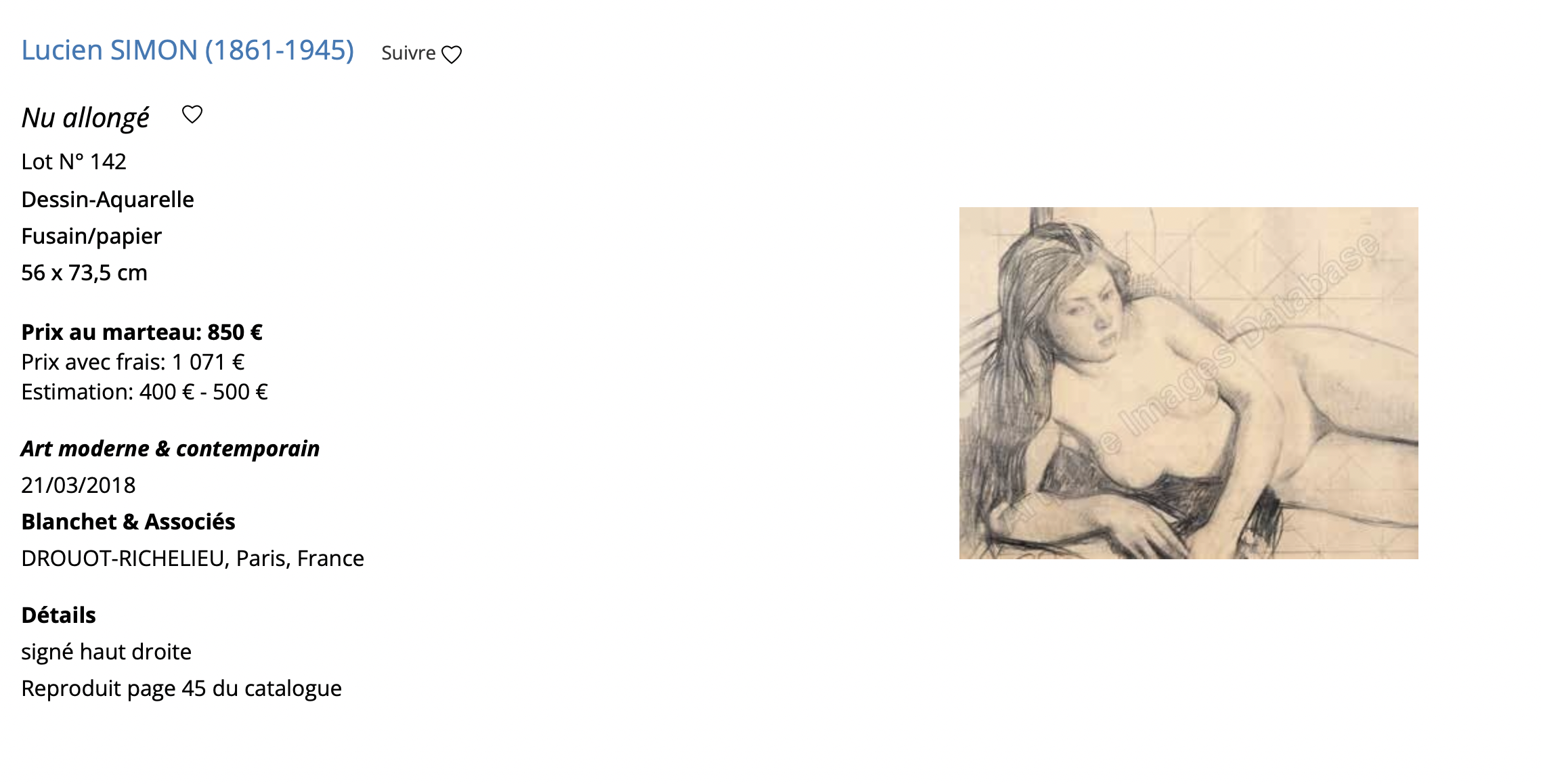
We found a preparatory drawing of the same model.
sold
The painter and his model, by Lucien Simon
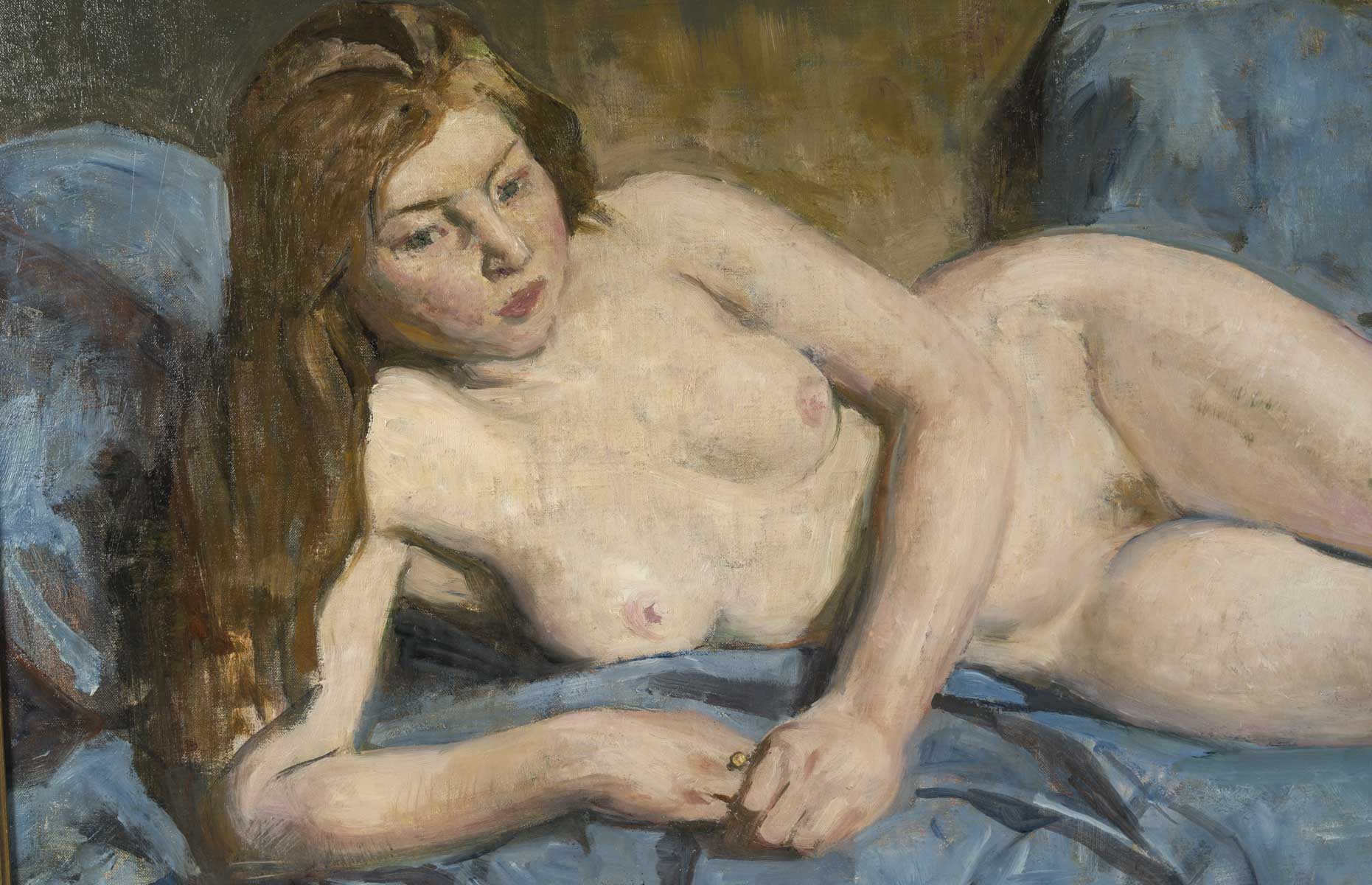
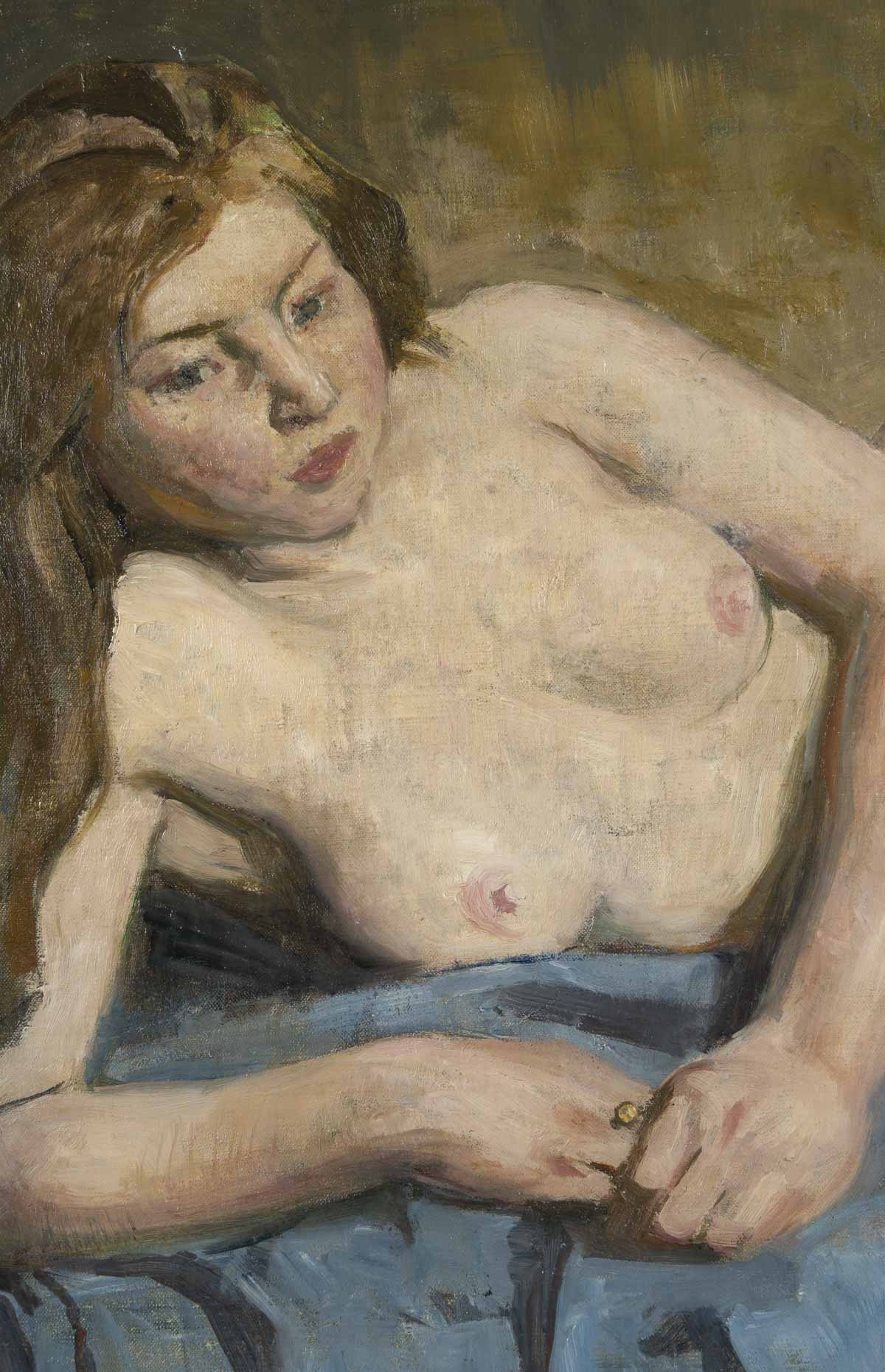
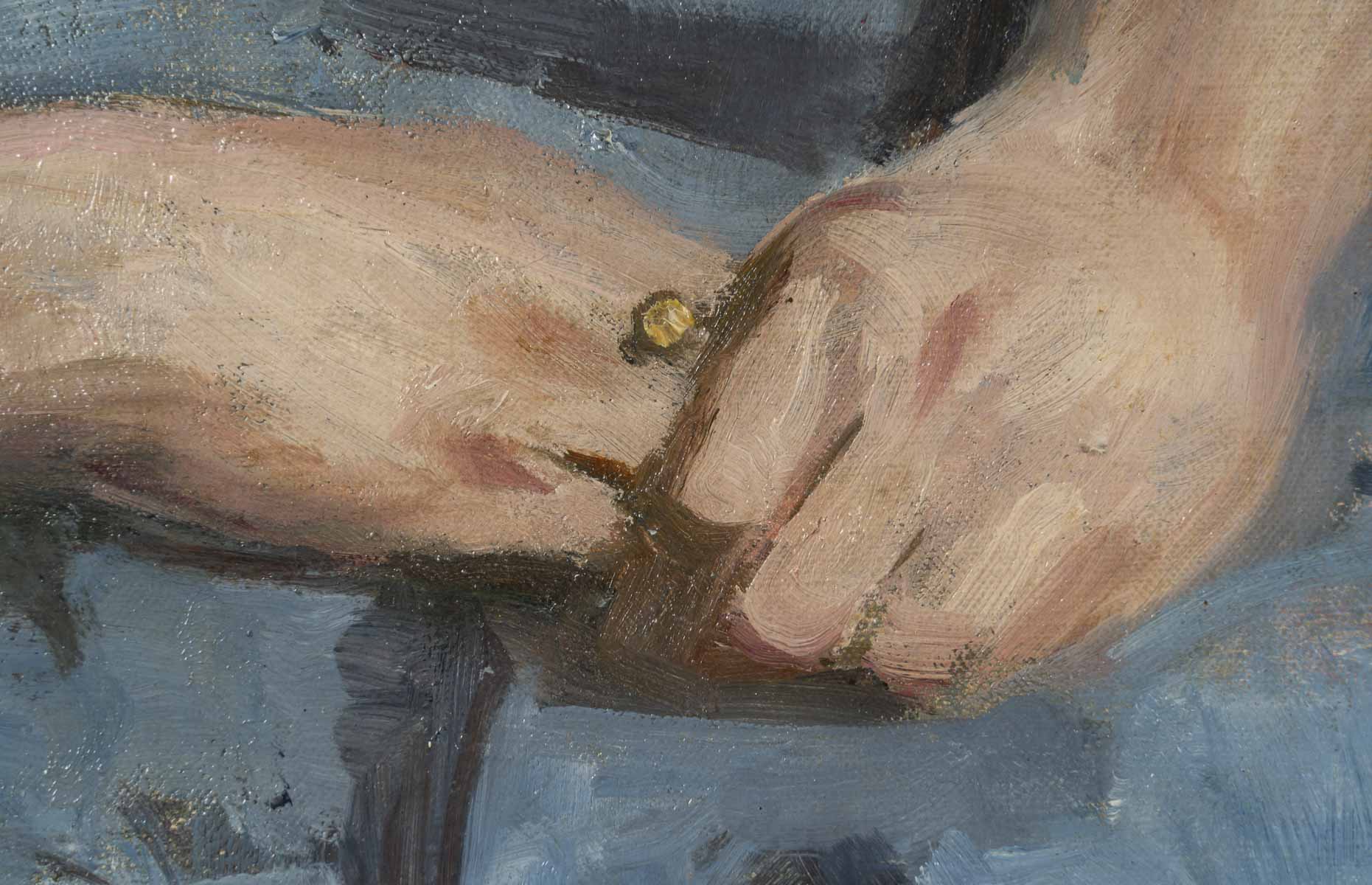
Her young model, with long Venetian-blonde hair, strikes a pose. Lying on her side, she rests on a blue fabric with a structured drape. The touch is light and sculptural.
Lucien Simon is a sensitive artist, independent of fashion.
Lucien Simon is known as a painter of genre scenes, and his portraits and nudes are the figures and silhouettes of his family life and daily life in Brittany.
He preserved his artistic independence and distinctive style amidst the new movements of his time.
Biography
Lucien Simon, born in Paris into a bourgeois Parisian family and died in Sainte-Marine, was a French painter, watercolorist, draughtsman and lithographer. His father was a medical doctor in the Saint-Sulpice district, and his mother came from a family of shopkeepers and lawyers.
Lucien Simon remained free of the artistic trends of his time. He was not exactly an Impressionist, and turned his back on Cubism and the Dada movement, which overturned the pictorial tradition.
He was influenced by three great masters.
Édouard Manet inspired him with his subjects drawn from everyday life, his painting of nudes and his use of bold colors.
From Diego Velasquez, he focuses on individual portraits and paintings of the human condition, and from Franz Hals on portraits of groups of people.
Training
Educated in Paris at the Lycée Louis-le-Grand, he prepared for the École Polytechnique after his baccalaureate, while still wielding pencils and brushes. During his military service, he befriended the painter George Desvallières. He joined Jules Didier’s studio. From 1880 to 1883, he studied with Tony Robert-Fleury and William Bouguereau at the Académie Julian.
Artistic career
Lucien Simon made his debut at the Salon des artistes français in 1881 and exhibited at the Salon de la Société nationale des Beaux-arts. In 1884, his Portrait de Mme Ch. Simon won an honorable mention at the Salon des artistes français. He became well known in Parisian society.
During a trip to the Netherlands, he was influenced by the works of Franz Hals, but considered himself a self-taught painter. “It was at the mutual school of the Atelier Julian that Simon claims to have learned the best of indispensable technique, with George Desvallières, Ménard and Dinet”. In 1890, he joined the Société nationale des Beaux-arts, fed up with the academic authoritarianism of the Salon des artistes français. Lucien Simon sold his first canvases to foreign collectors, then to the State from 1895.
In 1891, he married Jeanne Dauchez, sister of Breton painter André Dauchez, herself a painter. In the same year, 1891, he met Charles Cottet. It was at this time that Lucien Simon discovered Brittany. He bought a disused semaphore in Sainte-Marine, which he converted into a vacation home for his family and a painting studio in 1902. He stayed there regularly, several months a year.
Family life was a source of inspiration for him, from portraits of his wife, children and grandchildren to play scenes.
Lucien Simon’s passion for Brittany, and in particular for the Pays Bigouden (Finistère), earned him the nickname “Painter of the Bigouden Country”. He observed and painted the Bretons and Bigoudens, whom he saw at mass, religious festivals, funfairs, on the harbor or in the fields behind his house. Lucien Simon painted Breton landscapes and scenes of daily life.
In June 1899, he joined the Société nouvelle de peintres et de sculpteurs, with a first group show at the Galerie Georges Petit in Paris in March 1900.
The years 1900-1920 marked the peak of Lucien Simon’s career. His reputation led him to travel extensively, and he took part in several international exhibitions (London, Venice, Pittsburgh).
The French state bought paintings from him (La Procession, 1901, Paris, Musée d’Orsay), as did Japanese, European and American museums and renowned foreign collectors (the Russians Ivan Morozov and Sergei Shchukin). The Prado Museum buys La Leçon de danse from him. In 1900, Lucien Simon won a gold medal at the Paris Universal Exhibition and was named Chevalier de la Légion d’Honneur. In 1911, he was promoted to Officer of the same order.
Along with Charles Cottet, Émile-René Ménard, André Dauchez and René-Xavier Prinet, he was part of the group of painters dubbed “La Bande noire” by the critics, no doubt in opposition to the clear canvases of the Impressionists.
In 1917, he was sent to the front to draw war scenes.
In the early years of the interwar period, he moved away from contemporary themes to take inspiration from Antiquity, with subjects such as Nausicaa at the fountain.
After the First World War, Lucien Simon was a recognized painter, painting the crowds at pardons and popular balls with an increasingly colorful palette.
In 1923, Lucien Simon was appointed professor at the École des Beaux-arts in Paris. He was elected to the Académie des Beaux-arts on March 5, 1927, and the following year became a member of the Conseil supérieur des musées nationaux.
in 1933 he was appointed official painter to the French Navy. He also taught at the Académie de la Grande Chaumière. The French government commissioned several works from him.
He reduced his official appearances from the 1930s onwards. He was still involved in the creation of the Casa de Velázquez in Madrid, inaugurated in 1929. In 1931, he gave several lectures in Buenos Aires on contemporary French painting. In 1937, he won the Grand Prix at the Paris Universal Exhibition for his decorative panels in the Luxembourg Pavilion: La Procession dansante à Echternach, La Sûre and La Moselle.
During the Second World War, he retired to Sainte-Marine, where he devoted himself entirely to Breton subjects. He painted the landscapes of the Odet, and the daily lives of sailors and farmers.
Lucien Simon died on October 13, 1945 in Sainte-Marine. He is buried in the Combrit cemetery in Finistère.
A Lucien Simon Association was created in June 2010 by Dominique Boyer, the painter’s grandson.
His works are scattered around the world: museums in Boston and Philadelphia in the United States, the Buenos Aires Fine Arts Museum, private collections in Japan (Matsukata collection), European museums. In France, several museums hold paintings by Lucien Simon: the Musée d’Orsay in Paris, in the rooms devoted to the painters of the Bande noire, and some Breton museums, such as the Musée des Beaux-Arts in Quimper.
Museums
France
– Paris, Musée d’Orsay; Palais du Luxembourg; Petit Palais
– Brest, Musée des Beaux-Arts
– Île-Tudy, ballroom: decorative paintings, 1898.
– Loctudy, Kerazan manor, Astor foundation:
– Combrit – Sainte-Marine
– Lyon, Museum of Fine Arts
– Nantes, Musée des Beaux-Arts Paris :
– Pau, Musée des Beaux-Arts :
– Quimper, Musée des Beaux-Arts
– Rennes, Musée des Beaux-Arts
Spain
– Madrid, Reina Sofía Museum
United States
– Philadelphia, Philadelphia Museum of Art
– Pittsburgh, Carnegie Institute
Hungary
– Budapest, Museum of Fine Arts
Romania
– Bucharest, National Art Museum of Romania
Russia
– Moscow, Pushkin Museum
– Saint Petersburg, Hermitage Museum
Sweden
– Stockholm, Nationalmuseum
Source
https://fr.wikipedia.org/wiki/Lucien_Simon

